
As homes age, the way we use them changes. Everyday tasks like reaching into a cabinet, bending to grab cookware, or organizing daily essentials can quietly become more difficult over time. Without the right storage solutions in place, these small challenges can add unnecessary frustration and even safety concerns to daily life.
At Custom Built Design & Remodeling, we’ve helped homeowners across the Greater Lansing and Northern Michigan areas remodel their homes with long-term comfort and usability in mind. We know that aging-in-place remodeling isn’t about giving up style; it’s about making smart design decisions that support independence, safety, and ease of use at every stage of life.
In this article, we’ll walk through the ten most effective storage ideas for aging-in-place remodels, explaining why each option matters and how thoughtful storage design can make your home easier, safer, and more enjoyable to live in for years to come.
- Pull-Out Drawers Instead of Deep Cabinets
- Lowered Upper Cabinets and Shelving
- Roll-Out Pantry Shelving
- Drawer-Based Kitchens (Fewer Doors, More Drawers)
- Entryway Storage with Seating
- Closet Systems with Adjustable Components
- Bathroom Storage Within Easy Reach
- Laundry Room Storage That Reduces Lifting
- Built-In Storage in Living Areas
- Multi-Purpose Storage Furniture
Header PC: Guardian Storage
1. Pull-Out Drawers Instead of Deep Cabinets
PC: Dura Supreme
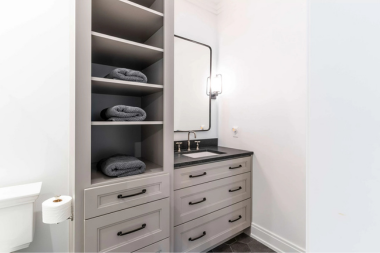
Many homes rely on deep base cabinets that were never designed with long-term accessibility in mind. As mobility, balance, and joint comfort change over time, these cabinets can become one of the most frustrating (and risky) features in a kitchen or bathroom. Items get pushed to the back, visibility drops, and accessing everyday essentials requires bending, kneeling, or overreaching.
Pull-out drawers completely change how storage works by bringing items out into the open, allowing homeowners to see and reach what they need without strain.
Why it matters:
Reducing repeated bending and reaching helps protect joints, prevent falls, and make daily routines easier and more comfortable.
Recommended Design Tips:
- Use full-extension drawers so nothing is hidden in the back
- Install soft-close hardware to prevent slamming
- Organize drawers by frequency of use, with daily items at the top
- Choose heavy-duty drawer systems designed for long-term durability
2. Lowered Upper Cabinets and Shelving
PC: The Spruce
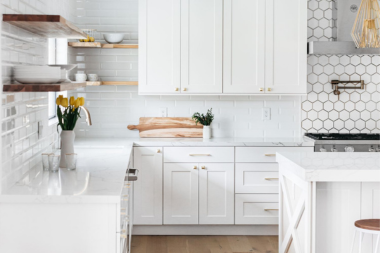
Upper cabinets are often installed at heights that work well early on but become difficult over time. Reaching overhead can strain shoulders and increase the risk of losing balance, especially when handling heavier items like dishes or small appliances.
Lowering cabinets or replacing them with accessible shelving ensures essential items remain within a safe, comfortable reach.
Why it matters:
Minimizing overhead reaching reduces fall risk and shoulder strain while making kitchens easier to use independently.
Recommended Design Tips:
- Mount upper cabinets 2-3 inches lower than standard when possible
- Use open shelving for frequently used dishes or glassware
- Keep heavier items at waist or chest height
- Add under-cabinet lighting to improve visibility
3. Roll-Out Pantry Shelving
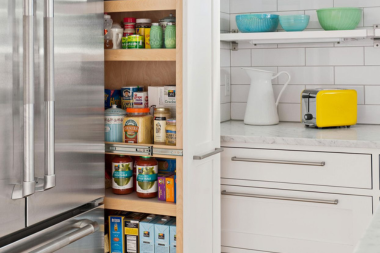
Traditional pantries often require homeowners to bend down, twist, or reach deep into shelves to find items. Over time, this can turn meal prep into a frustrating and physically demanding task.
Roll-out pantry shelving improves organization and visibility, making it easier to manage food storage and avoid unnecessary strain.
Why it matters:
Better access means fewer awkward movements and less fatigue during everyday kitchen tasks.
Recommended Design Tips:
- Install full-height pull-out pantry units when space allows
- Use clear containers or labeled bins for quick identification
- Store heavier items between knee and shoulder height
- Choose shelves with raised edges to keep items from shifting
4. Drawer-Based Kitchens (Fewer Doors, More Drawers)
PC: Dura Supreme
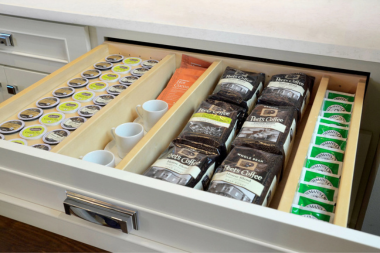
Traditional cabinet doors require bending down and reaching into enclosed spaces. Drawer-based kitchens eliminate that step, allowing homeowners to access items from a standing position.
This layout also encourages better organization, reducing clutter and simplifying daily routines.
Why it matters:
Drawers support safer movement patterns and reduce unnecessary physical effort.
Recommended Design Tips:
- Use shallow drawers for utensils and tools
- Reserve deeper drawers for cookware and appliances
- Add non-slip liners to keep items secure
- Group drawers by task to reduce walking and reaching
5. Entryway Storage with Seating
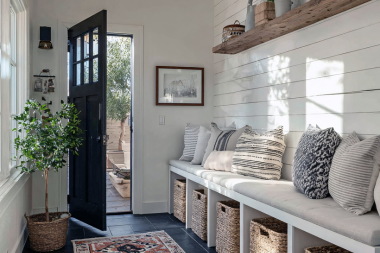
The entryway is one of the most used and often most overlooked spaces in a home. Shoes, coats, and bags can quickly become tripping hazards if storage isn’t well planned.
Adding seating and accessible storage turns the entryway into a safer, more functional transition space.
Why it matters:
Seated storage supports balance and stability while reducing fall risk during daily routines.
Recommended Design Tips:
- Include a built-in bench for putting on and removing shoes
- Add drawers or cubbies beneath seating
- Install hooks at reachable heights
- Choose durable, easy-to-clean materials
6. Closet Systems with Adjustable Components
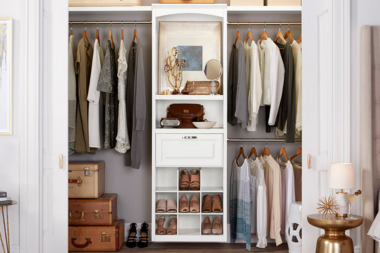
PC: Lowe’s
Closet needs change over time. Fixed shelving and rods can limit flexibility and require future remodeling as accessibility needs evolve.
Adjustable closet systems allow storage to adapt as mobility, reach, and daily routines change.
Why it matters:
Flexible storage supports long-term independence without costly updates later.
Recommended Design Tips:
- Use adjustable shelving and rods
- Add drawers for daily essentials
- Keep commonly used items within the safe reach zone
- Consider pull-down rods where appropriate
7. Bathroom Storage Within Easy Reach
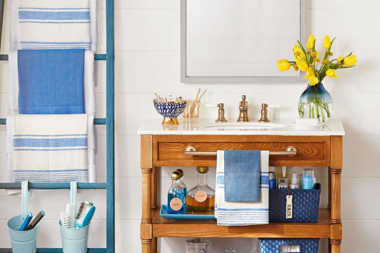
Bathrooms are one of the most important areas to design carefully for aging in place. Poor storage leads to cluttered counters and unsafe reaching, especially in wet areas.
Thoughtful bathroom storage keeps essentials accessible while maintaining a clean, safe environment.
Why it matters:
Reducing clutter and awkward movements helps prevent slips and falls.
Recommended Design Tips:
- Choose vanity drawers over cabinet doors
- Install recessed medicine cabinets
- Add shower niches at comfortable heights
- Avoid storage that requires bending near wet surfaces
8. Laundry Room Storage That Reduces Lifting
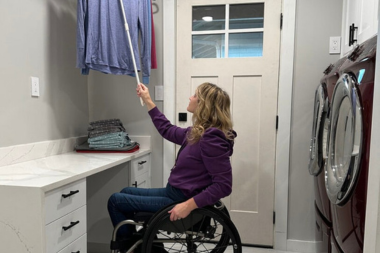
PC: New Mobility
Laundry tasks often involve lifting, bending, and carrying heavy loads. Without proper storage, these movements can become physically demanding over time.
Smart storage reduces strain while keeping supplies organized and within reach.
Why it matters:
Less lifting and twisting help protect joints and prevent injury.
Recommended Design Tips:
- Add pull-out hampers
- Store detergents at waist height
- Install shelving above front-loading machines
- Include counter space for folding
9. Built-In Storage in Living Areas
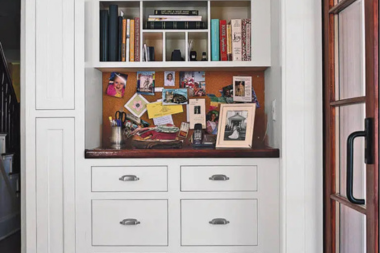
PC: This Old House
Living rooms tend to accumulate clutter, which can narrow walkways and create tripping hazards. Built-in storage keeps items organized while maintaining clear paths.
Low-profile built-ins also provide storage without overwhelming the space.
Why it matters:
Clear walkways improve safety and ease of movement throughout the home.
Recommended Design Tips:
- Use base-height built-ins
- Include drawers instead of doors
- Avoid sharp corners
- Blend storage with furniture for a calm, unified look
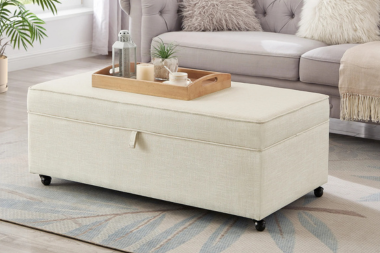
10. Multi-Purpose Storage Furniture
PC: Room & Decor
Multi-purpose furniture provides storage without adding bulk or obstacles. These pieces help keep essential items close while maintaining open floor space.
Why it matters:
Reducing clutter supports safer movement and simpler daily routines.
Recommended Design Tips:
- Choose storage benches or ottomans
- Use beds with built-in drawers
- Keep pathways clear
- Prioritize stability and ease of use
Next Steps to Remodeling Your Home for Aging-in-Place
Smart storage plays a bigger role in aging-in-place remodeling than many homeowners realize, affecting daily comfort, safety, and independence.
By choosing accessible, easy-to-use storage solutions, you can reduce bending, reaching, and clutter, making your home easier to navigate and maintain.
Custom Built Design & Remodeling helps Michigan homeowners plan aging-in-place remodels that balance functionality, safety, and long-term comfort, without sacrificing style.
If you’re thinking about aging in place, schedule a free consultation with Custom Built to review storage solutions that fit your home, your needs, and the way you want to live now and in the future.

Now that you know more about the top storage ideas for your aging-in-place remodel, let’s explore how to build an addition for aging-in-place, tips for upgrading your kitchen for the golden years, and the top home modifications for your project:
- How To Build a Home Addition for Aging Parents in Michigan - Discover how to build a home addition that is comfortable and exciting for your golden years.
- 5 Tips To Design a Kitchen for Aging In Place - Discover the top strategies for designing a kitchen that is both accessible and visually appealing for your aging-in-place remodel.
- Top Home Modifications for Aging-in-Place - A high-level overview of the best features to include in your aging-in-place remodeling project - each perfect for an accessible and comfortable home.