
A basement remodel often starts with a simple idea: “We need more usable space.” But often quickly turns into a bigger question: “What should this space actually be?” Without a clear layout plan, basements can end up feeling unfinished, awkward, or underused, even after the remodel is complete.
At Custom Built, we’ve helped hundreds of families turn dark, disconnected basements into intentional spaces that truly support how they live, whether that’s hosting friends, giving kids room to grow, working from home, or creating a place to unwind. We know that the right layout is what makes the difference between a basement that looks good and one that gets used every day.
In this guide, we’ll walk through the nine most popular and practical basement layout design ideas, explain how each one works, and help you start thinking about which options make the most sense for your home and your family:
- Open-Concept Entertainment Area
- Multi-Functional Rooms That Flex With Your Life
- Home Theater Zones
- Playroom or Teen Hangout Spaces
- Guest Suite Layouts
- Home Office or Study Areas
- Bar or Kitchenette Zones
- Storage-Focused Layouts
- Wellness and Fitness Areas
Header PC: The Spruce
1. Open-Concept Entertainment Area

PC: Studio McGee
Sometimes the best layout is the simplest one. An open-concept basement keeps the footprint flexible by avoiding interior walls altogether.
This works especially well when you:
- Want a large sectional or modular seating
- Host game nights or family gatherings
- Need a space that can shift between lounging and activity
Modular furniture makes it easy to move pieces out of the way when you need more open floor area without committing the space to a single use.
2. Multi-Functional Rooms That Flex With Your Life
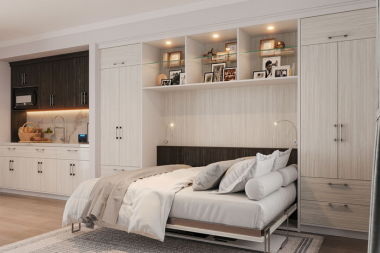
Multi-purpose layouts are ideal for basements that need to do more than one job. A home office most of the year can quickly become a guest room when needed.
Smart features include:
- Murphy beds or Murphy bunk beds
- Double doors or large barn doors to close off the space
- Furniture that doesn’t scream “bedroom” when the bed is tucked away
This approach gives you flexibility without sacrificing comfort or design.
3. Home Theater Zones
PC: Decoist
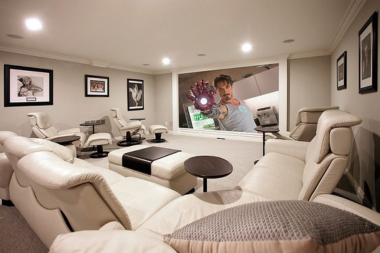
A home theater doesn’t have to feel over-the-top to be effective. The layout starts with one key element: a wall large enough for a TV or projector.
Popular design details include:
- Built-in surround sound and speakers
- Tiered or raised seating for better sightlines
- LED perimeter lighting and smaller recessed lights
- Storage for movies, games, and equipment
Adding a small popcorn or drink station nearby keeps the experience contained and intentional.
4. Playroom or Teen Hangout Spaces
PC: Houzz
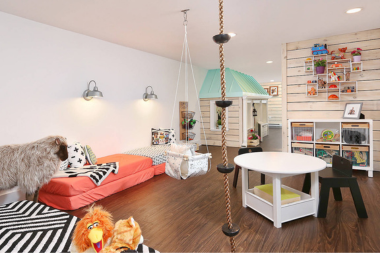
Basements are perfect for kids’ spaces because they can be durable, comfortable, and easy to clean.
Layout considerations often include:
- LVT or rubber flooring instead of carpet
- Wall protection like shiplap or wainscoting
- Living-room-style seating with bean bags and chairs
- Built-in storage for toys, consoles, and games
For older kids, Murphy bunk beds turn the space into a sleepover-friendly hangout without adding bedroom clutter upstairs.
5. Guest Suite Layouts
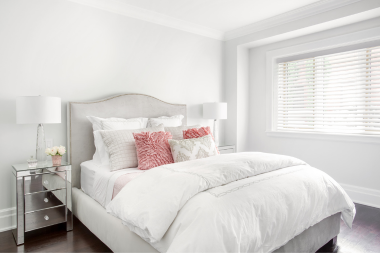
A well-planned basement guest suite offers privacy for visitors while still feeling connected to the rest of the home.
Common layout features:
- One larger bathroom with dual access (public and private)
- Egress windows to meet bedroom code requirements
- Thoughtful furniture placement to keep the room open
- Wall treatments that help the space feel finished, not temporary
This layout works well for extended family visits or long-term guests.
6. Home Office or Study Areas
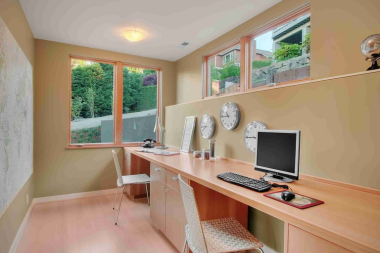
PC: Houzz
Basement offices work best when they’re treated like real workspaces, not leftover corners.
Successful layouts often include:
- Long built-in or floating desks for multiple users
- Plenty of outlets and task lighting
- Storage walls to keep clutter off desks
- Design details that create a professional backdrop for video calls
When possible, natural light should be prioritized to avoid harsh overhead lighting and make the space more inviting.
7. Bar or Kitchenette Zones
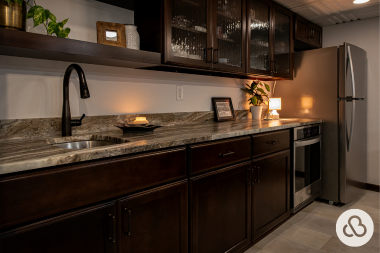
Basement bars have become more intentional and more fun. Smaller layouts often place the bar near the entertainment area, while larger basements can support a dedicated kitchenette zone.
Design trends we’re seeing:
- Moody colors and bold finishes
- Speakeasy-inspired details
- A look that’s distinct from the rest of the house
- Purposeful separation from seating areas in larger layouts
Because basements are separate from main living spaces, you have more liberty to take design risks here.
8. Storage-Focused Layouts
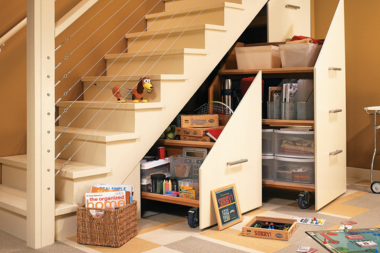
PC: Woodsmith Plans
Storage doesn’t have to mean a giant unfinished box. Smart basement layouts integrate storage where it makes sense.
This includes:
- Custom closets that fit into unused corners
- Built-in storage under the stairs
- Rooms shaped around the layout, not forced into squares
When storage is intentional, it supports the rest of the basement instead of competing with it.
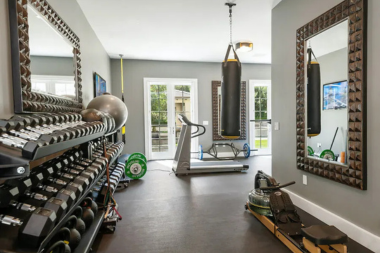
9. Wellness and Fitness Areas
PC: Decorilla
Wellness spaces work best when they’re separated from everyday distractions. Basements are ideal for this, especially with the right layout.
Key design elements include:
- Rubber flooring for comfort and impact protection
- Mirrors and wall-mounted equipment storage
- Proper ventilation and air movement
- Windows where possible for fresh air and light
Some homeowners also add saunas, cold plunges, or nearby wet rooms to create a more complete wellness experience.
How to Know Which Basement Layout Is Right for You
The right basement layout isn’t about squeezing in as many features as possible; it’s about making smart decisions based on how your family actually lives. Before locking in walls, rooms, or built-ins, take time to think through how the space will be used day to day.
Start by asking yourself a few practical questions:
1. How will we use this space most of the time?
A basement that’s primarily for entertaining should feel open and flexible. If it’s meant for guests, work, or workouts, privacy and separation matter more. Choose a layout that supports the primary use first, then layer in secondary features.
2. Who will use the basement, and how often?
Kids, teens, guests, and adults all use space differently. A teen hangout or playroom benefits from durability and storage, while a home office or guest suite needs quiet, lighting, and comfort. The more frequent the use, the more intentional the layout should be.
3. Do we need flexibility for the future?
Families change. A playroom today may become a guest room or office later. Layouts with fewer fixed walls, multi-functional rooms, or Murphy beds adapt better over time and protect your long-term investment.
4. What are the limitations of the space?
Ceiling height, mechanicals, support posts, and window locations all affect what’s possible. A good layout works with these constraints, not against them, using them to define zones instead of fighting them.
5. What problems are we trying to solve?
Lack of storage, nowhere to host, kids spread throughout the house, or no quiet place to work are all layout problems in disguise. When your basement layout directly addresses those issues, the space becomes more than a nice upgrade; it becomes essential.
The best basement layouts are the ones that feel natural from the moment you start using them. When the space fits your routines, supports your family, and leaves room to evolve, you’ll know you’ve chosen the right direction.
Next Steps to Remodeling Your Basement
Square footage alone doesn’t make a basement functional. Without the right layout, even a large space can feel disconnected or underused, instead of supporting the way your household actually lives.
By exploring different basement layout ideas, from entertainment zones and guest suites to offices and wellness spaces, you now have a clearer picture of how thoughtful planning turns an underused basement into a space you’ll enjoy every day.
At Custom Built, we help homeowners move beyond generic basement designs by creating layouts that feel intentional, comfortable, and built to last, backed by clear planning and expert guidance.
If you’re considering a basement remodel, schedule a consultation with our team. We’ll help you evaluate your space, talk through layout options, and design a basement that truly fits your home and your family.

Now that you know more about the top basement layout design ideas for your home remodel, let’s explore what the first step of the Custom Built Proven Process looks like with a new basement finish, how much your project will cost, and the ways you can elevate your space:
- What is a Discovery Call with Custom Built? - This article details what your first call with Custom Built looks like as you start planning your remodel.
- How Much Does Basement Finishing Cost in Lansing, MI? - Finishing your basement for the first time? Learn more about how much it’ll cost today.
- How Much Can a Finished Basement Add to Your Home’s Value? - This article breaks down how a well-designed basement remodel can boost resale appeal, improve daily living, and deliver long-term return on investment.