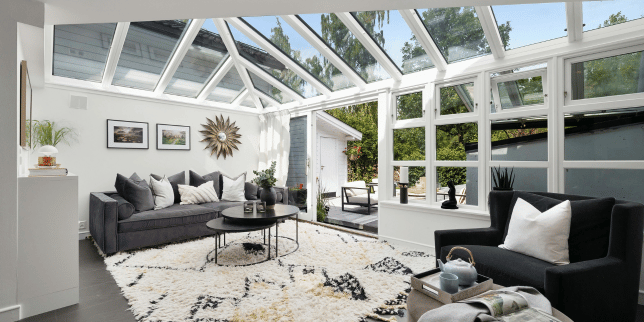

Struggling with a dim, uninspiring basement? Many homeowners feel stuck with dark corners, low ceilings, and layouts that make it hard to use the space effectively.
At Custom Built, we’ve helped Michigan homeowners transform their basements into functional, inviting spaces. With thoughtful lighting design, even the trickiest basements can feel bright, spacious, and stylish.
In this guide, we’ll share nine practical tips and creative ideas for layered, task, accent, and ambient lighting, so you can plan a basement lighting scheme that enhances both comfort and functionality:
- Layer Your Lighting
- Use Recessed or Flush-Mount Fixtures for Low Ceilings
- Incorporate Cooler Color Temperatures
- Highlight Architectural Features
- Add Task Lighting
- Install Smart Lighting Controls
- Maximize Natural Light
- Select Energy-Efficient Fixtures and Bulbs
- Avoid Common Mistakes
1. Layer Your Lighting
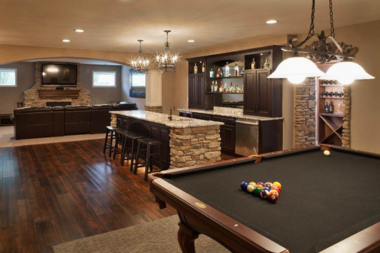
PC: Houzz
Layered lighting gives your basement both functionality and ambiance, allowing you to adjust the feel of the space for different activities. By combining ambient, task, accent, and focal lighting, you create a flexible lighting plan that suits every corner of your basement.
Layered Lighting Tips:
- Use ambient lighting for overall illumination.
- Include task lighting for functional areas like reading nooks or a kitchenette.
- Add accent lighting to highlight architectural features or décor.
- Consider focal lighting for statement pieces like a fireplace or bar.
Custom Built Tip: Start with ambient lighting as your base, then layer in task and accent lights to create depth and flexibility.
2. Use Recessed or Flush-Mount Fixtures for Low Ceilings
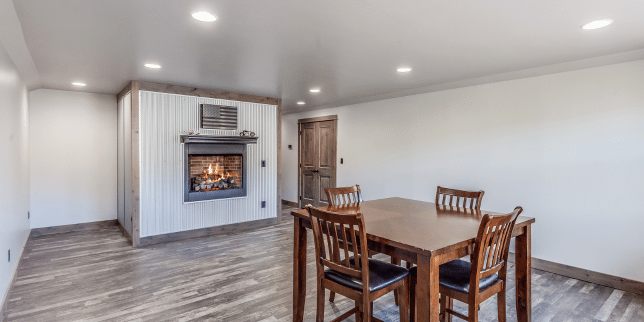
PC: The Home Depot
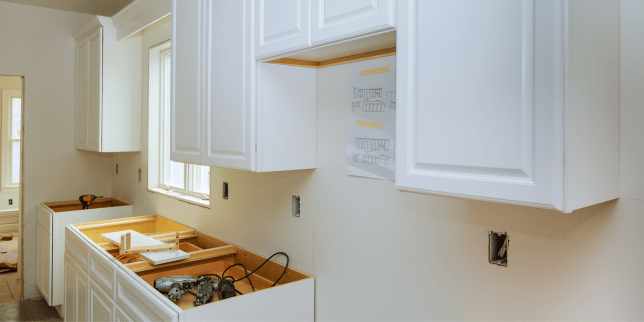
Low ceilings are common in basements, making large or hanging fixtures impractical. Recessed or flush-mount lighting maximizes headroom while keeping the space bright and unobstructed.
Recessed and Flush-Mount Fixtures Tips:
- Flush-mount lights sit close to the ceiling for low-profile lighting.
- Recessed can lights create clean lines without obstructing views or pathways.
- Ideal for basements with ceilings under 8 feet.
Custom Built Tip: Choose fixtures with subtle design details to add style without overwhelming the space.
3. Incorporate Cooler Color Temperatures
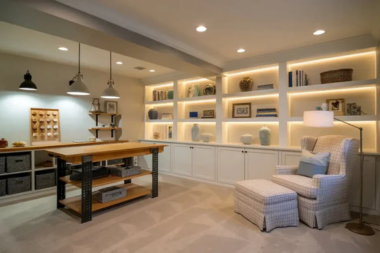
PC: Tallbox
Basements can feel dense or closed-in if the lighting is too warm. Cooler tones create a brighter, more open feeling, while warmer accent lights add comfort in seating or reading areas.
Color Temperature Tips:
- Main lighting should be in the 3500K-4000K range for a natural, bright feel.
- Avoid warm 2700K-3000K lighting for primary fixtures.
- Use warmer accent lighting in cozy seating or reading areas.
Custom Built Tip: Layer cooler and warmer lights to balance functionality and ambiance.
4. Highlight Architectural Features
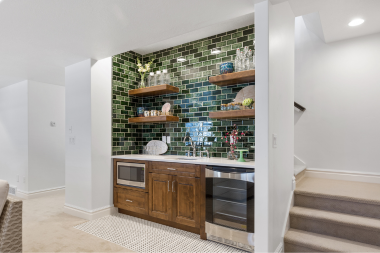
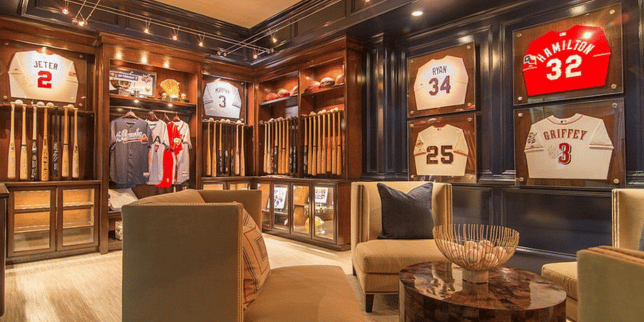
Lighting can draw attention to features you want to emphasize, whether it’s artwork, a fireplace, or a custom bookcase. Properly placed accent and wall-wash lighting elevate the design of your basement.
Architectural Feature Highlighting Tips:
- Wall sconces or strip lighting can emphasize bookcases, artwork, or fireplaces.
- Use wall-wash lighting for flat surfaces or textured walls.
- Position lights to create depth and visual interest.
Custom Built Tip: Add dimmers to adjust the focus and mood of your highlighted features.
5. Add Task Lighting
PC: The Spruce
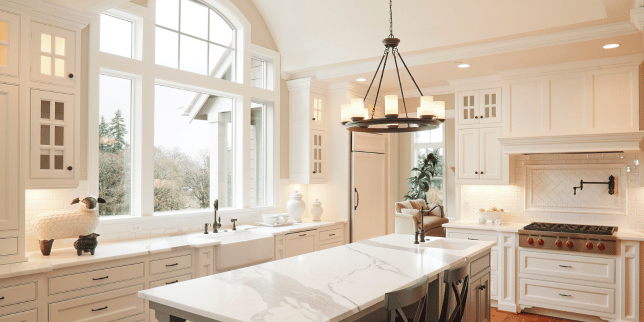
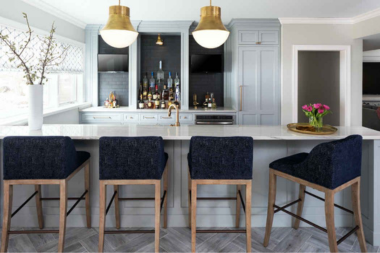
Functional areas need specific lighting for usability. Task lighting ensures spaces like kitchenettes, bars, and reading nooks are well-lit without relying solely on overhead lights.
Task Lighting Tips:
- Pendant lights over islands or bars.
- Swing-arm sconces near reading or seating areas.
- Lighting for closets or storage spaces to reach deeper shelves.
Custom Built Tip: Consider adjustable fixtures to allow flexibility for different tasks and setups.
6. Install Smart Lighting Controls
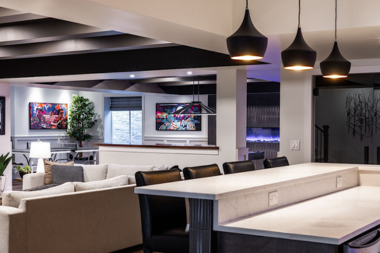
Smart lighting adds convenience and flexibility, letting you adjust brightness, color, and zones without rewiring. This is especially useful in multi-purpose basements.
Smart Lighting Control Tips
- Wi-Fi-enabled LED bulbs for remote control.
- Set up zones for different areas of the basement.
- Automate lighting schedules for convenience and efficiency.
Custom Built Tip: Create presets for different activities like movie nights, entertaining, or work-from-home setups.
7. Maximize Natural Light
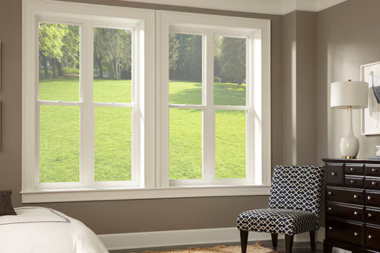
PC: Lowe’s
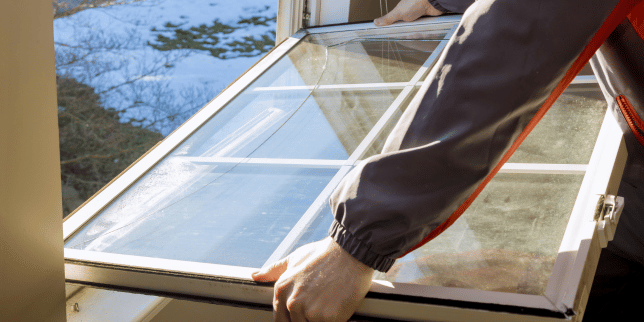
Even small windows or walkout doors can bring significant daylight into a basement. Using natural light effectively reduces reliance on artificial lighting and makes the space feel more open.
Natural Lighting Tips:
- Use sliders, walkout doors, and transom windows.
- Reflective surfaces or light-colored walls amplify natural light.
- Position furniture and décor to maximize light distribution.
Custom Built Tip: Pair natural light with layered artificial lighting to maintain brightness after sunset.
8. Select Energy-Efficient Fixtures and Bulbs
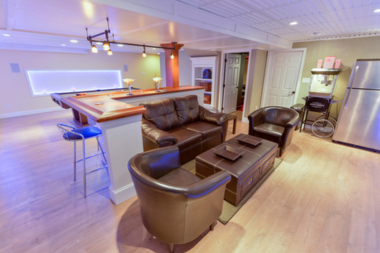
PC: Houzz
LEDs and other energy-efficient options save money and reduce maintenance while providing quality illumination. Consider the type of bulb for each fixture to balance efficiency and style.
Energy-Efficient Fixtures and Bulbs Tips:
- LEDs are the most energy-efficient and widely used option.
- Choose bulbs appropriate for task, ambient, and accent needs.
- Combine with dimmers to save energy without sacrificing comfort.
Custom Built Tip: Consider integrated LED fixtures for long-term savings and consistent light quality.
9. Avoid Common Mistakes
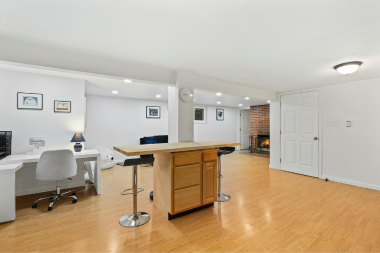
Planning lighting around structural constraints, furniture, and layout ensures the basement is functional and comfortable. Poor planning can lead to dark corners, inaccessible outlets, or obstructed pathways.
Additional Tips for Avoiding Common Mistakes
- Plan lighting around beams, posts, and walls.
- Consider outlet placement relative to furniture and fixtures.
- Avoid cluttering low ceilings with oversized fixtures.
Custom Built Tip: Sketch your basement layout with furniture and lighting positions before installation.
Next Steps to Remodeling Your Basement
Well-planned lighting can completely transform your basement, making it brighter, more functional, and more inviting.
By layering ambient, task, accent, and focal lighting, and considering ceiling height, natural light, and energy efficiency, you create a space that works for every activity.
At Custom Built, we guide homeowners through every step of basement design, helping them choose the right fixtures, placement, and lighting strategies for their space.
Whether you’re finishing a basement or remodeling an existing one, start by evaluating your layout and lighting needs, then connect with a professional to bring your vision to life.

Now that you know more about basement lighting ideas, let’s explore what the first step of the Custom Built Proven Process looks like with a new basement finish, how much your project will cost, and the ways you can elevate your space:
- What is a Discovery Call with Custom Built? - This article details what your first call with Custom Built looks like as you start planning your remodel.
- How Much Does Basement Finishing Cost in Lansing, MI? - Finishing your basement for the first time? Learn more about how much it’ll cost today.
- 5 Ways to Elevate Your Basement Space - A guide to upgrading your existing basement space, from home gyms to installing stylish lighting solutions.