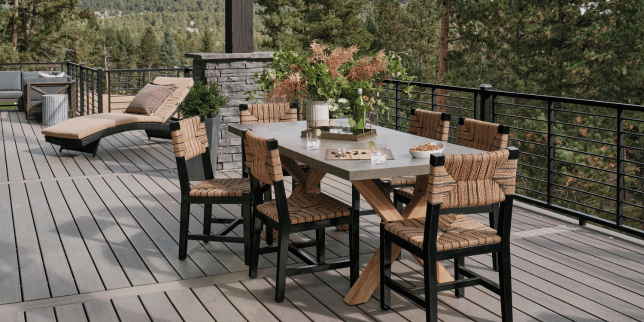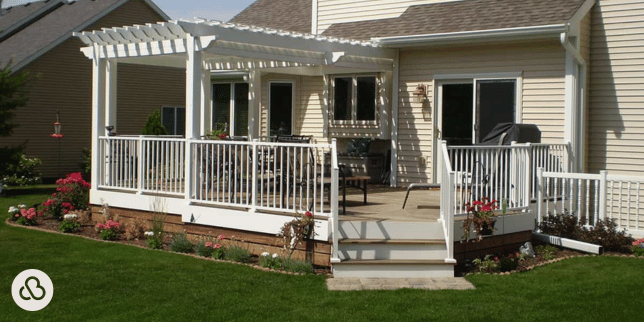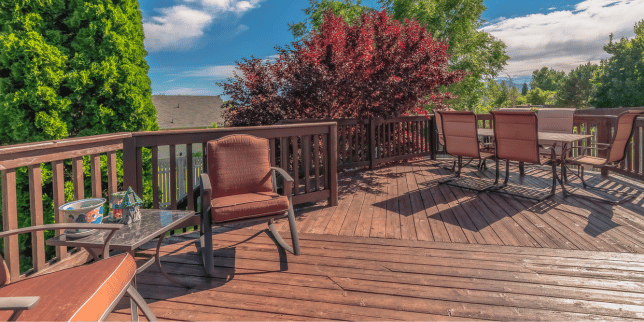

If you're planning a new deck, one of the first decisions you'll face is whether to build with composite decking or traditional wood. At first glance, wood often appears to be the more affordable option, which can make composite decking feel difficult to justify. However, upfront pricing only tells part of the story. Maintenance costs, repairs, lifespan, warranties, and long-term value can dramatically change the true cost of ownership over the life of your deck.
As a TrexPro Platinum deck builder serving Greater Lansing, we've built both wood and composite decks for decades. We've seen homeowners choose wood because of the lower initial investment, and others invest in composite because they want to eliminate ongoing maintenance and maximize long-term value.
In this guide, we'll compare the costs of composite and wood decking across every major category so you can determine which option makes the most financial sense for your home, budget, and lifestyle:
- Upfront Material Costs: Is Composite Really More Expensive?
- Installation and Labor Costs
- How Deck Size and Layout Affect Cost
- Are Composite Railing Systems More Expensive?
- Do Composite and Wood Decks Require Different Foundations?
- Maintenance and Repair Costs Over Time
- Lifespan and Replacement Costs
- How Do Composite and Wood Decks Affect Resale Value?
- Long-Term Value vs. Upfront Budget
- So, Are Composite Decks Cheaper Than Wood?
Upfront Material Costs: Is Composite Really More Expensive?
For many homeowners, the conversation starts and ends with material pricing.
While composite decking has a reputation for being significantly more expensive than wood, that isn't always the case.
Composite Decking Costs
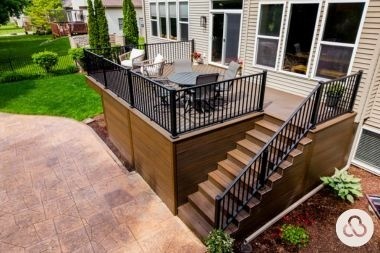
Entry-level composite decking products have become much more affordable over the past decade.
In many cases, basic composite deck boards are not dramatically more expensive than quality pressure-treated decking when comparing deck surface materials alone.
However, many homeowners choose composite decking because of the premium options available:
- Enhanced colors and finishes
- Hidden fastener systems
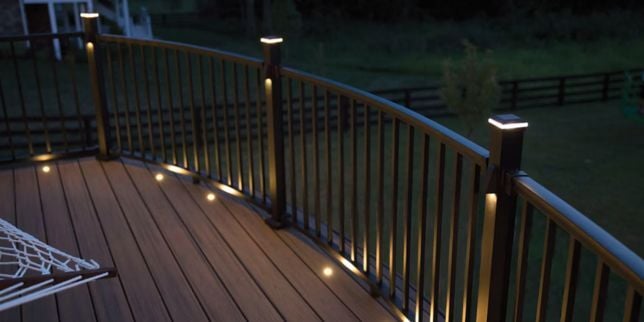
- Integrated lighting
- Premium railing systems
- Long-term warranties
Here’s a more detailed snapshot of Trex composite decking by quality:
- Trex Enhance: $20 - $23 per square foot
- Trex Select: $27 per square foot
- Trex Transcend: $32 per square foot
- Trex Transcend Lineage: $34 per square foot
- Trex Signature: $48 per square foot
Wood Deck Costs
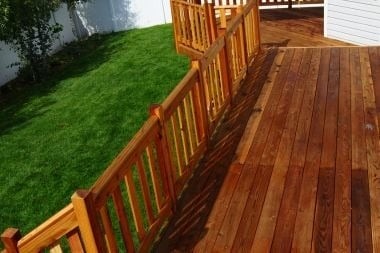
Pressure-treated lumber remains the lowest-cost decking material upfront.
Homeowners looking for a more premium wood appearance often choose cedar, but once you move into higher-end cedar products, costs can approach those of many composite decking systems.
Let’s take a closer look at those wood decking costs:
- Treated: $16 per square foot
- Cedar: $23 - $25 per square foot
- Ipe: $29 - $38 per square foot
Winner for Upfront Material Costs: Wood
Installation and Labor Costs

Many homeowners assume composite decks cost substantially more to install.
In reality, labor costs are often very similar.
Composite Deck Installation
Composite decking may require:
- Additional framing for picture-frame borders
- Extra blocking in certain locations
- More detailed finishing work
These upgrades aren't always required, but they help create the clean, polished appearance many homeowners expect from a composite deck.
Wood Deck Installation
Wood decks use traditional framing methods and familiar installation techniques.
Whether you're building with pressure-treated lumber or cedar, labor costs generally remain comparable to composite installations.
Winner for Installation Costs: Tie
How Deck Size and Layout Affect Cost
Regardless of material, deck size remains one of the biggest cost drivers.
Composite Deck Designs
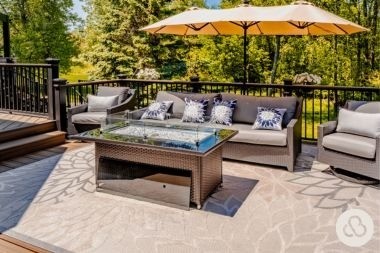
Many composite deck projects include:
- Picture-frame borders
- Breaker boards
- Custom layouts
- Integrated lighting
- Premium rail systems
These design features add cost but also contribute to the finished appearance.
Wood Deck Designs
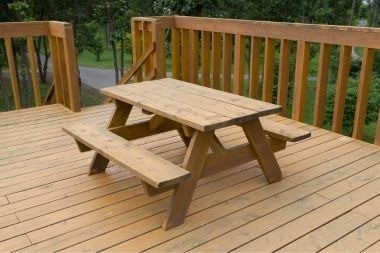
Wood decks can incorporate many of the same design elements, but homeowners often choose simpler layouts to keep costs lower.
The result is frequently a more budget-focused project.
Winner: Depends on design goals
Are Composite Railing Systems More Expensive?
Yes. This is one area where composite systems typically cost more.
Composite Railing Costs
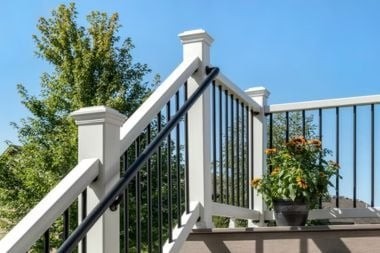
Composite railing systems often include:
- Aluminum components
- Cable rail options
- Integrated lighting
- Decorative accents
- Hidden fasteners
These systems are attractive and low-maintenance but come at a premium price.
Here are composite railing prices you can expect during a deck build:
- Trex Select: $72 per linear foot
- Trex Transcend: $104 per linear foot
- Trex Signature: $141 per linear foot
- Trex Transcend Cocktail Rail: $139 per linear foot
- Trex Signature Cocktail Rail: $176 per linear foot
Wood Railing Costs
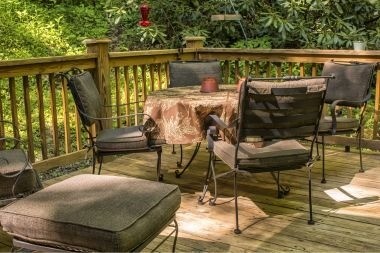
Wood railings are typically less expensive upfront and can be customized with various materials and styles:
- Treated: $50 per linear foot
- Cedar: $114 per linear foot
However, they still require ongoing maintenance.
Winner for Upfront Cost: Wood
Do Composite and Wood Decks Require Different Foundations?

Not significantly. Both deck types generally require similar structural support systems.
Composite Deck Considerations
Composite railings sometimes require:
- Additional blocking
- Extra framing support
- Additional border joists
There are also newer composite framing products entering the market that eliminate concerns about warping, bowing, and weather-related deterioration.
Wood Deck Considerations
Traditional wood framing remains the most common substructure system.
Regardless of material, homeowners should ensure:
- Proper permits are pulled
- Local building codes are followed
- Footings meet Michigan frost requirements
Winner: Tie
Maintenance and Repair Costs Over Time
This is where the financial comparison starts to change.
Composite Deck Maintenance

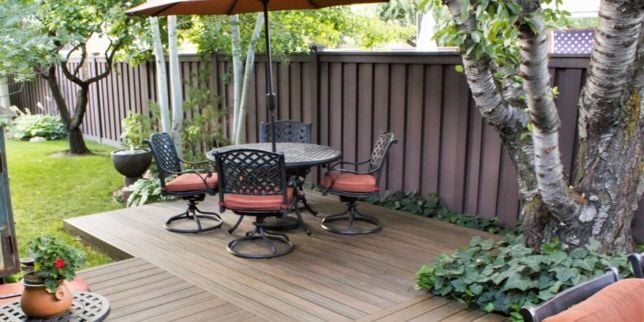
PC: NeoTimber
Composite decks require very little maintenance.
For most homeowners:
- Spray off debris periodically
- Clean occasional stains with soap and water
- Remove leaves and organic material when needed
There is:
- No staining
- No sealing
- No sanding
- No power washing every season
Many products also include warranties covering fading, staining, and manufacturing defects.
Wood Deck Maintenance
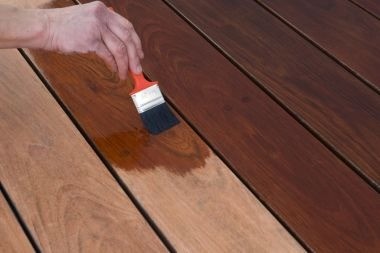
Wood requires ongoing maintenance to preserve appearance and longevity.
Typical maintenance includes:
- Power washing
- Sanding
- Resealing
- Restaining
Most homeowners repeat this process every two to three years, depending on sun exposure and weather conditions.
Over time, these maintenance expenses add up significantly.
Winner for Long-Term Maintenance Costs: Composite
Lifespan and Replacement Costs
Lifespan is one of the biggest factors affecting overall value.
Composite Deck Lifespan
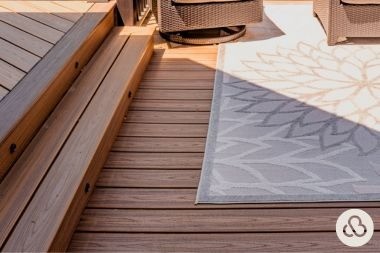
Many composite decking products are designed to last for decades without the rot, splintering, or weather-related deterioration associated with traditional wood.
Depending on the product line, homeowners can expect warranties ranging from 25 years to 50 years, with some manufacturers offering limited lifetime warranties and transferable coverage for future homeowners.
As a TrexPro Platinum builder, we can also provide additional labor warranty coverage on qualifying installations, giving homeowners even greater confidence that their deck is built to perform for the long haul.
Here’s an expanded look at warranties you can access from Trex composite decking and additional features:
Decking
- Trex Signature® Decking: 50-Year Limited Residential Warranty
- Trex® Transcend® Lineage® Decking: 50-Year Limited Residential Warranty
- Trex® Transcend® Decking: 50-Year Limited Residential Warranty
- Trex Select® Decking: 35-Year Limited Residential Warranty
- Trex® Enhance® Decking: 25-Year Limited Residential Warranty
Railing
- Trex Signature® Aluminum Railing: 50-Year Limited Residential Warranty
- Trex Signature® X-Series™ Railing: 50-Year Limited Residential Warranty
- Trex Signature® X-Series™ Cable Rail: 10-Year Limited Residential Warranty
- Trex Select® Composite Railing: 25-Year Limited Residential Warranty
- Trex Enhance® Composite Railing: 25-Year Limited Residential Warranty
- Select™ Aluminum Railing: 25-Year Limited Residential Warranty
- Trex Enhance™ Steel Railing: 15-Year Limited Residential Warranty
Lighting
- Trex® Deck Lighting (LEDs and Housings): 7-Year Limited Warranty
- Trex® Deck Lighting (Transformer, Timer, Dimmer, WiFi Controller, Solar Components): 3-Year Limited Warranty
- Trex® Deck Lighting (Solar Battery): 1-Year Limited Warranty
For more information on Trex’s product warranty, check out their website.
Under-Deck Drainage
- Trex RainEscape® System: 25-Year Limited Warranty
For more information on the Trex RainEscape® System warranty, visit its webpage.
Wood Deck Lifespan
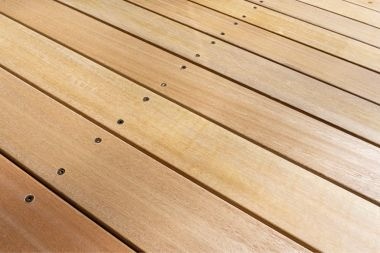
A properly maintained wood deck may last:
- 25-30 years with excellent maintenance
A poorly maintained wood deck may only last:
- 10-15 years
Michigan's combination of snow, rain, humidity, and summer sun can be particularly hard on wood.
Winner for Lifespan: Composite
How Do Composite and Wood Decks Affect Resale Value?
Composite Decks
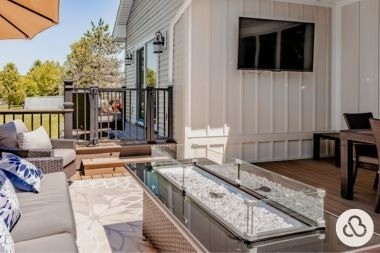
Composite decking is often viewed as a premium outdoor living feature because it offers long-term durability with minimal maintenance. Buyers appreciate the ability to enjoy the space without worrying about regular staining, sealing, or extensive upkeep.
Benefits buyers often value include:
- Long lifespan
- Low maintenance requirements
- Attractive appearance over time
- Manufacturer warranty protection
According to the 2025 Cost vs. Value Report by JLC (The Journal of Light Construction), a composite deck addition recoups an average of 83.8% of its cost at resale, making it one of the strongest outdoor living investments homeowners can make.
Wood Decks
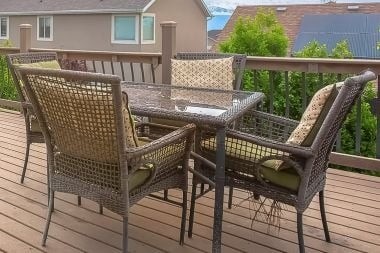
Wood decks continue to be a popular and functional option for many homeowners. They provide a classic appearance and typically have a lower upfront cost than composite alternatives.
However, buyers also recognize that wood decks require ongoing maintenance, including:
- Staining
- Sealing
- Repairs
- Board replacements
Because of these future maintenance responsibilities, wood decks often deliver less perceived value during the home-buying process. According to the 2025 Cost vs. Value Report, a wood deck addition recoups an average of 60.1% of its cost at resale.
Winner: Composite
While both options can enhance outdoor living and add value to a home, composite decking currently delivers a significantly higher return on investment. Combined with its low-maintenance benefits and long lifespan, it's easy to see why many Greater Lansing homeowners view composite decking as the stronger long-term investment.
Long-Term Value vs. Upfront Budget
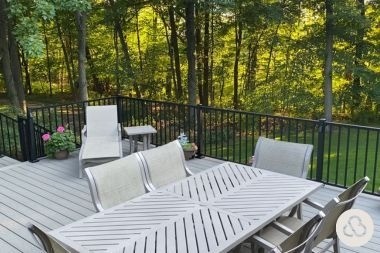
If your primary concern is minimizing upfront investment, wood usually wins.
If your goal is maximizing value over the life of the deck, composite often becomes the better financial decision.
Wood may cost less today. Composite may cost less over 20 to 30 years.
The difference comes down to how much value you place on:
- Maintenance savings
- Longevity
- Warranty protection
- Increased resale appeal
- Time spent enjoying your deck instead of maintaining it
So, Are Composite Decks Cheaper Than Wood?
The answer depends on the timeframe you're evaluating. For many Greater Lansing homeowners, composite decking ultimately pays for itself through reduced maintenance, longer lifespan, and stronger long-term value.
Composite Decks Are Usually:
- More expensive upfront
- Less expensive to maintain
- Longer lasting
- Better protected by warranties
- More attractive to future buyers
Wood Decks Are Usually:
- Less expensive initially
- More affordable for tight budgets
- More expensive to maintain over time
- Shorter lived in Michigan's climate
Next Steps to Building or Remodeling Your Greater Lansing Deck
Comparing composite and wood decking requires looking beyond the initial price tag and considering maintenance, lifespan, warranties, and long-term value.
While wood remains the lower-cost option upfront, composite decking often becomes the more economical investment over the life of the deck.
At Custom Built Design & Remodeling, we've helped Greater Lansing homeowners compare decking options and design outdoor living spaces that align with their goals, budget, and lifestyle.
If you're considering a new deck and want help comparing composite and wood options, schedule a consultation to discuss the right solution for your home.

Now that you know more about whether composite decks are cheaper than wood decks, let’s explore what the best deck builders have in common, how much deck stairs cost, and our design-build deck services:
- What Do the Best Deck Builders in Greater Lansing, Michigan Have in Common? Insights from a Mid-Michigan Deck Contractor - Learn the five qualities that separate the best deck builders in Greater Lansing, from Michigan-specific construction practices and structural craftsmanship to thoughtful design and proven project processes.
- How Much Do Deck Stairs Cost in Michigan?: Data from a Greater Lansing Deck Builder - Explore what affects deck stair pricing in Michigan, including materials, design complexity, railing options, and project-specific factors that can impact your overall deck budget.
- Custom Built Deck-Building Services - From design to construction, we create durable, beautiful decks tailored to your home, lifestyle, and budget while guiding you through every step of the process.