
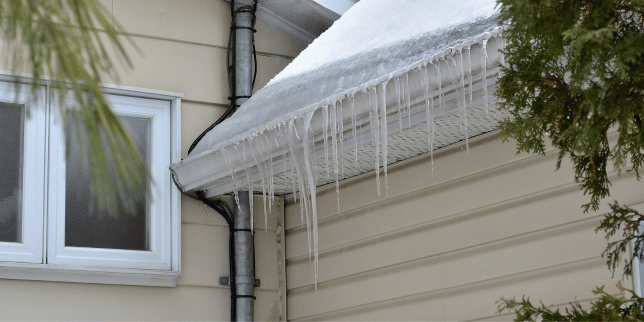
Winter in Michigan can be beautiful, but it also brings hidden dangers for homeowners. One of the most common threats is the formation of ice dams, those icy ridges along your roof’s eaves that can lead to water leaks, damaged shingles, and even broken gutters. Many homeowners don’t realize that these seemingly harmless icicles are often a warning sign of larger insulation or ventilation issues.
As a Greater Lansing roofing contractor, we’ve seen firsthand how ice dams can disrupt homes and cause costly repairs. From rooftop ice removal to long-term prevention strategies, we help Michigan families understand the risks and the solutions so they can protect their homes and stay safe throughout the winter.
In this article, we’ll break down what ice dams are, how they form in Michigan, the risks they pose, and practical steps (both short-term and long-term) to prevent them from causing damage to your home:
- What Are Ice Dams?
- How Ice Dams Form in Michigan
- 7 Risks of Ice Dam Damage
- Prevention: How to Stop Ice Dams Before They Start
- Long-Term Solutions: Sustainable Ways to Eliminate Ice Dams
What Are Ice Dams?
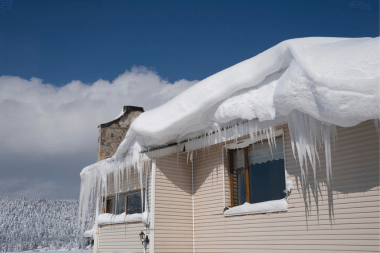
An ice dam is a ridge of ice that forms along the eave edge of your roof, often indicated by large icicles hanging from your gutters.
Small icicles aren’t necessarily a problem. They can be a normal sign that your leaf guards are working correctly.
True ice dams form when snow on your roof melts unevenly and refreezes near the eaves, creating a barrier that traps water behind it.
How Ice Dams Form in Michigan
PC: HOF Roofing
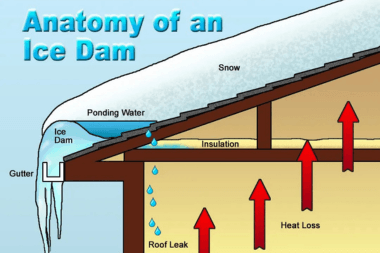
Michigan’s climate is a perfect storm for ice dams: snow accumulates on roofs during winter, then melts when sunlight or warmer days strike. If your attic is improperly ventilated, heat from your home rises, meeting the cold roof deck and causing snow to refreeze near the eaves.
Key factors:
- Poor ventilation: Without proper airflow in the attic, heat pockets form, melting snow unevenly.
- Insufficient insulation: Gaps in insulation allow warm air to escape, accelerating melt and refreeze cycles.
- Uneven snow coverage: Snow should sit uniformly across your roof. Pockets of thinner snow often indicate insulation issues that can lead to ice dams.
7 Risks of Ice Dam Damage
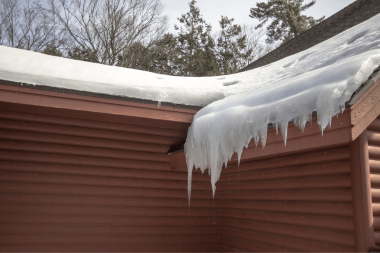
While ice dams might seem like a minor inconvenience, the reality is that they can lead to significant and often costly damage to both your home’s exterior and interior.
Understanding the potential risks of ice dams can help you take the necessary steps to prevent them before they cause serious problems. From immediate safety hazards to long-term structural damage, here’s why it’s essential to address ice dams as soon as you notice them forming.
3 Short-Term Risks
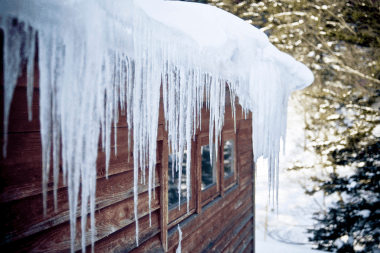
1. Safety Hazards
When ice dams build up, icicles hanging from gutters can grow large and heavy. If these icicles break loose, they can pose serious injury risks, especially if they fall over access points like doors or walkways. A large ice chunk can be dangerous, and if it falls, you could be held liable for injuries.
2. Gutter Damage
Ice dams often cause gutters to snap off or become dislodged due to the weight of the ice. Once damaged, gutters may no longer be effective at channeling water away from your home, leading to further water damage and more costly repairs.
3. Shingle Damage
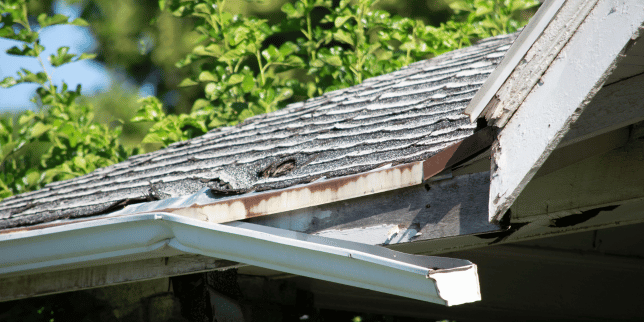
As the ice builds up, it can start to lift shingles or even pull them away from the roof deck. This damage is subtle at first but can result in leaks if not addressed. Even slight shifts in shingles compromise your roof’s integrity.
4 Long-Term Risks
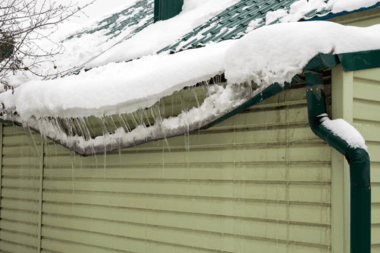
1. Water Intrusion
The biggest risk posed by ice dams is water seeping into your home. When the snow on the roof melts, it flows toward the eaves. As it hits the ice dam, the water has nowhere to go and often backs up under the shingles.
This is where the trouble begins. Water can leak into your home, causing damage to ceilings, walls, and insulation.
2. Ceiling and Wall Damage
Water entering through the roof can stain ceilings, drywall, and the trim around windows. These leaks are especially problematic in areas where the ceiling meets the walls, as water tends to gather in these spots, creating a prime environment for mold and mildew growth.
3. Long-Term Structural Damage
If not dealt with promptly, repeated exposure to moisture can rot the framing, rafters, and other structural elements of your home. This damage often isn’t visible at first, but over time it weakens your home’s structural integrity, leading to even bigger repairs down the road.
4. Increased Heating Costs
Ice dams often indicate poor insulation in your attic or roof. When warm air escapes from your living spaces, it melts snow on your roof, contributing to the formation of ice dams. This loss of heat means you may be paying more to heat your home, even as the ice dam problem worsens.
Prevention: How to Stop Ice Dams Before They Start
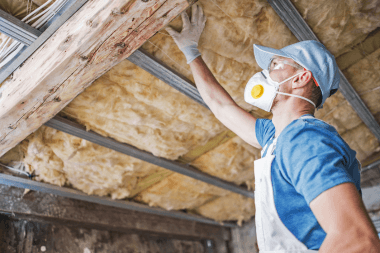
Preventing ice dams starts with understanding how they form and addressing the root causes. With the right steps, you can reduce the risk of ice dams and keep your home safe during Michigan’s cold winters. Here are some immediate solutions to consider:
1. Improve Attic Insulation
Proper attic insulation keeps heat from escaping into the roof space. When warm air leaks from the living areas, it melts the snow on your roof, creating the perfect conditions for ice dams to form. Ensure that your insulation is evenly distributed to maintain a consistent temperature across the entire roof.
2. Ventilate Your Attic
Ventilation helps maintain the same temperature between the attic and the exterior. A well-ventilated attic keeps the roof cold enough to prevent melting snow from refreezing near the eaves. If your attic is poorly ventilated, warm air can gather, causing snow to melt unevenly. Adding soffit vents and ridge vents can help facilitate airflow and prevent ice buildup.
3. Seal Air Leaks
Check for air leaks around pipes, vents, and chimneys. Sealing these gaps prevents warm air from rising into the attic, which is a common cause of melting snow and ice dams.
4. Keep Gutters Clean
Blocked gutters can prevent melting snow from draining properly, causing water to back up under your shingles. Regular gutter cleaning, especially before winter, ensures proper water flow and reduces the risk of water infiltration caused by ice dams.
5. Hire a Professional Ice Dam Removal Service
When ice dams become severe or difficult to manage, it's essential to call in a professional ice dam removal service. Professionals use specialized equipment, like heated hoses or industrial heat guns, to safely melt and remove ice from your roof without damaging shingles or gutters.
Disclaimer: Attempting to remove ice dams yourself can be dangerous. Climbing on a slippery roof or using improper tools can result in injury or damage to your home.
Long-Term Solutions: Sustainable Ways to Eliminate Ice Dams
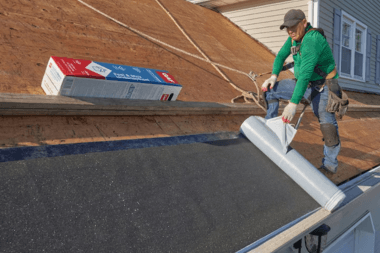
PC: GAF Roofing
While prevention methods can help in the short term, long-term solutions focus on creating a home that can withstand the challenges of Michigan’s winter weather year after year. These more permanent fixes can save you from ongoing issues with ice dams and costly repairs:
1. Install an Ice and Water Shield
An ice and water shield is a specialized membrane that adheres to your roof’s deck beneath the shingles. It provides an extra layer of protection against water infiltration, preventing moisture from entering your home if an ice dam does form. It’s an effective way to protect your roof and interior, especially around valleys, chimneys, and eaves.
2. Roof Replacement or Retrofit
If your roof is older or not designed to handle ice dams effectively, consider a full roof replacement or retrofitting with new materials. Adding thicker insulation, better ventilation, or a new roofing system designed to handle Michigan winters can prevent future problems.
3. Heat Cables (Long-Term Installation)
Installing heat cables along the eaves of your roof in a zigzag pattern can melt snow before it has the chance to freeze into a dam. Though heat tape is a common short-term solution, permanent heat cables can provide ongoing protection. Professional installation ensures that they are safely wired and won’t damage your roof or shingles.
4. Roof Raking
While this is a more hands-on approach, regularly raking your roof during the winter can help prevent snow from accumulating and melting unevenly. This is especially useful during heavy snowfalls. A roof rake with a long extension pole allows you to clear snow from the eaves and prevent it from turning into an ice dam.
Next Steps to Maintaining Your Michigan Roof
Ice dams aren’t just unsightly; they can cause serious damage to your roof, gutters, and interior spaces if left unchecked.
By understanding how they form and taking proactive measures, you can minimize risk and protect your home from costly repairs.
At Custom Built, we help Michigan homeowners identify ice dam risks and implement solutions that keep their homes safe and winter-ready.
Schedule a professional assessment of your roof’s insulation and ventilation with our team, or explore preventative options like heat tape or targeted ice removal before the next thaw.

Now that you know more about ice dams, their causes, and how to prevent them, let’s explore a deeper look into common roofing materials, the signs you may need a replacement, and a closer look at our professional roofing services:
- Comparing Roofing Materials for Your Michigan Home - Learn more about the various roofing materials you can incorporate into your replacement project.
- 8 Signs You May Need a Roof Replacement in Michigan - Discover the key warning signs that indicate it’s time to replace your roof before small issues turn into costly problems.
- Custom Built Roofing Services - Explore how Custom Built Design & Remodeling provides roofing services focused on durability, proper installation, and long-term protection for your home.
Topics: