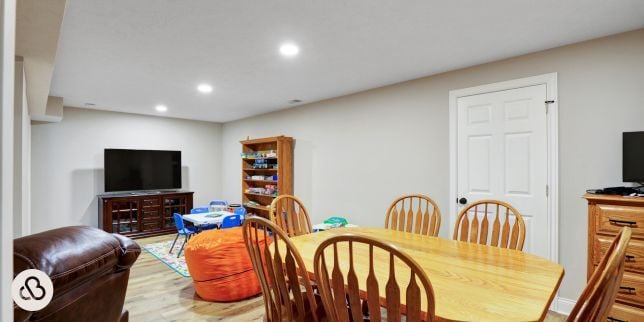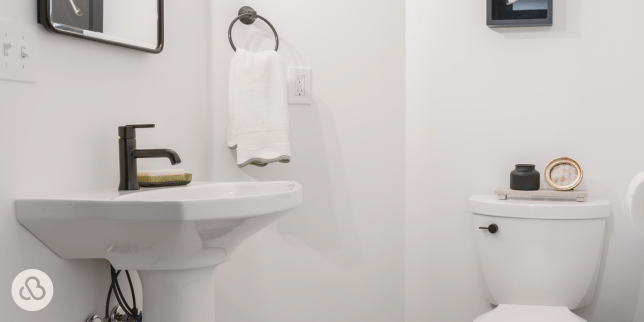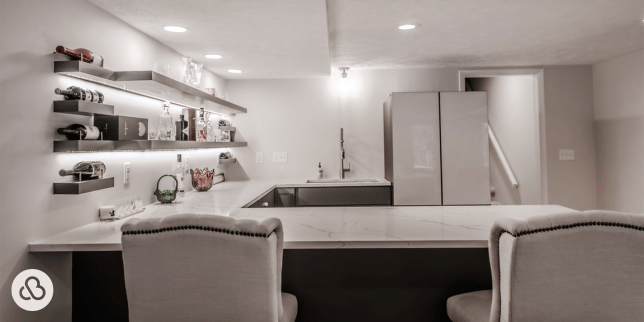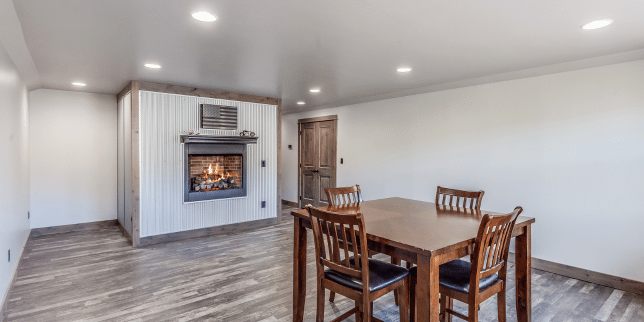

You’ve finally decided to transform your basement. Whether it’s a new guest suite, a home office, or a cozy family room, you’re excited about the possibilities. But as you dive into planning, one question looms: Why are basement remodels so expensive? From plumbing to flooring, seemingly small design choices can quickly add up, and it’s easy to feel overwhelmed by how quickly costs escalate.
As a Greater Lansing basement remodeling contractor, we’ve worked with homeowners across Michigan to bring their projects to life. We understand the excitement (and the anxiety) that comes with budgeting for a new space. With 20+ years of experience, we’ve seen firsthand how certain design decisions can have a big impact on both the cost and functionality of the finished product.
In this article, we’ll break down the ten design choices that influence your basement remodeling cost. By understanding these factors, you can make informed decisions, plan more effectively, and set a realistic budget for your project:
- The Purpose of the Space
- Overall Layout and Wall Placement
- Ceiling Height and Mechanical Constraints
- Bathrooms and Plumbing Additions
- Egress Windows and Natural Light
- Electrical and Lighting Design
- Flooring and Wall Finish Selections
- Custom Built-Ins and Specialty Features
- Code Requirements and Safety Features
- Early Design Planning vs. Last-Minute Changes
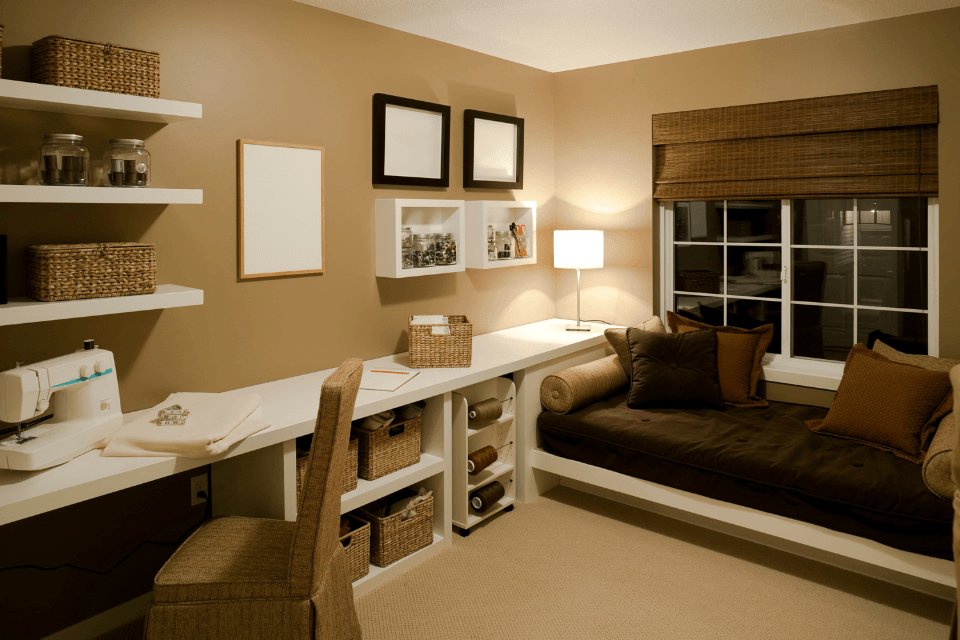
1. The Purpose of the Space
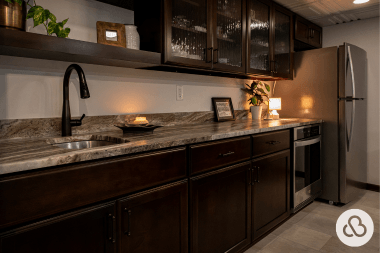
The single biggest cost driver is function.
Are you finishing a simple living area? Or are you adding a bedroom?
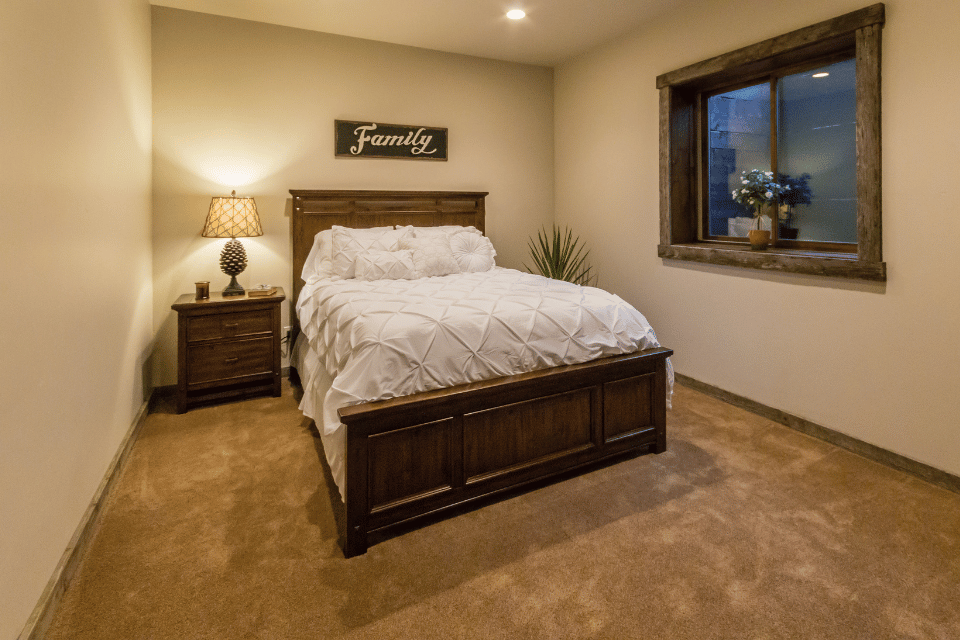
If you’re adding a bedroom, you’ll need an egress window. That means cutting into the foundation wall and installing a properly sized window and well. In many Michigan counties, egress is now required for most finished basement spaces, not just bedrooms.
Bathrooms also change the equation. If plumbing isn’t already in place or isn’t correctly placed, we may need to cut into the concrete floor, relocate drains, and repour the slab. That alone can significantly increase cost.
Before you design anything, decide what the space needs to do.
2. Overall Layout and Wall Placement
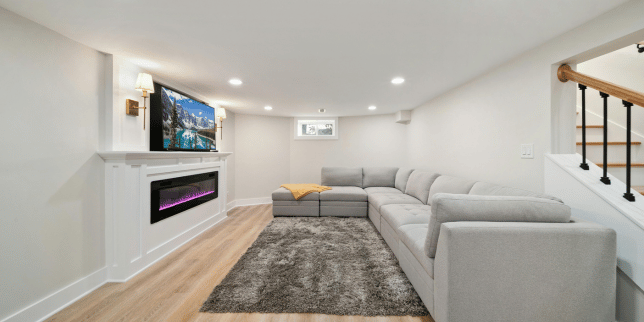
PC: Real Homes
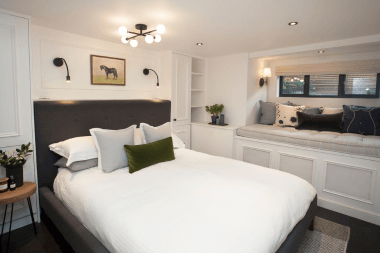
More rooms mean more money. It’s that simple.
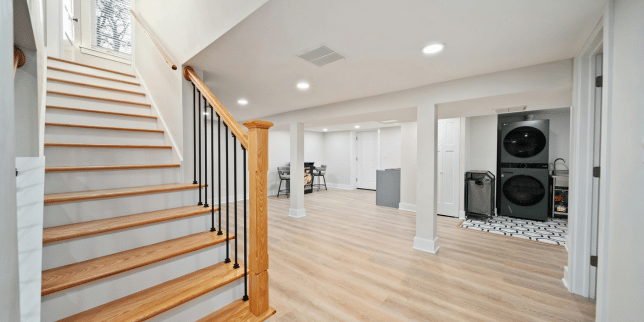
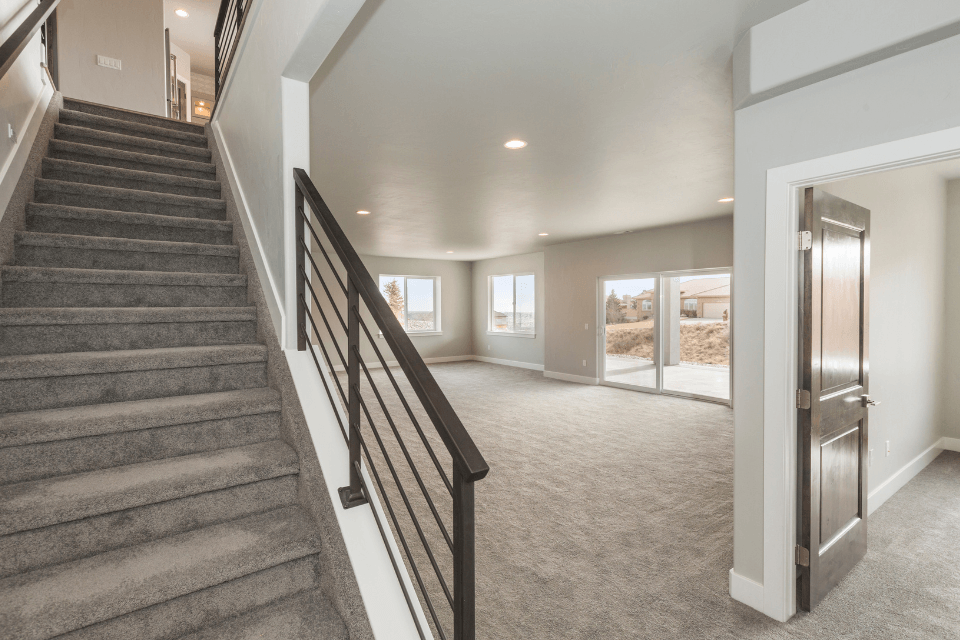
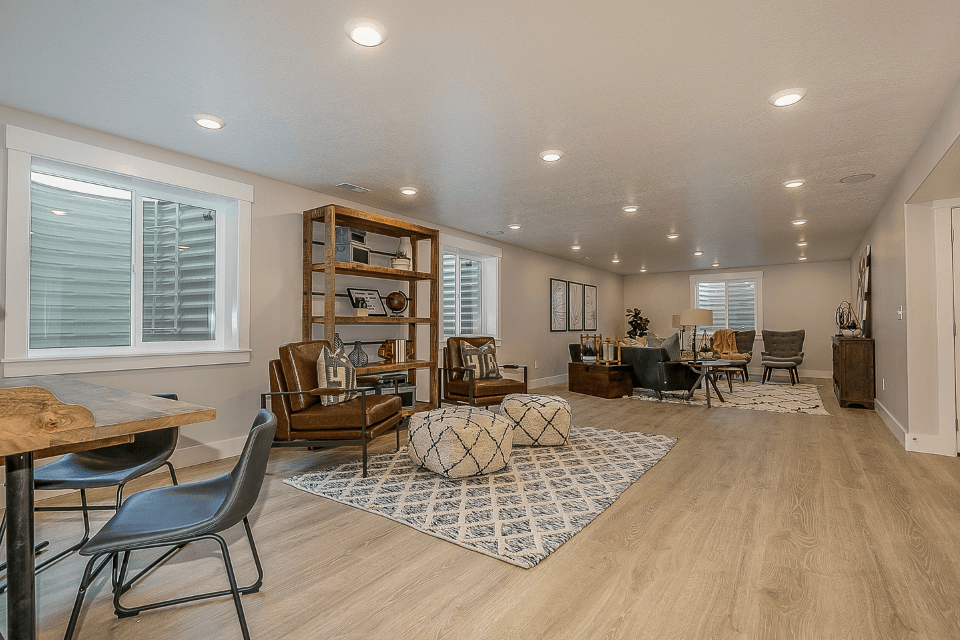
Every additional wall adds framing, drywall, insulation, electrical, baseboards, doors, and labor. An open-concept basement with a single large gathering space is typically more cost-effective than dividing the space into multiple rooms.
Most unfinished basements start out as an open area, so demolition costs are usually low unless structural changes are required. But once you begin dividing the space, material and labor costs rise quickly.
If your investment goals are lower, simplifying the layout can make a big difference.
3. Ceiling Height and Mechanical Constraints
PC: This Old House
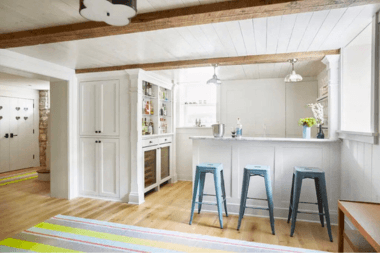
Basements come with fixed ceiling heights. We can’t make them taller.
In Michigan, bathrooms and bedrooms must have a minimum ceiling height of 84 inches per code. If ducts or mechanicals hang below the joists, we have to work around them carefully. Sometimes we can drywall around them. Other times, wrapping them would drop the ceiling too low and violate code.
In those cases, we may leave ducts exposed and paint them instead. It’s a design choice, but it’s also a cost and code decision.
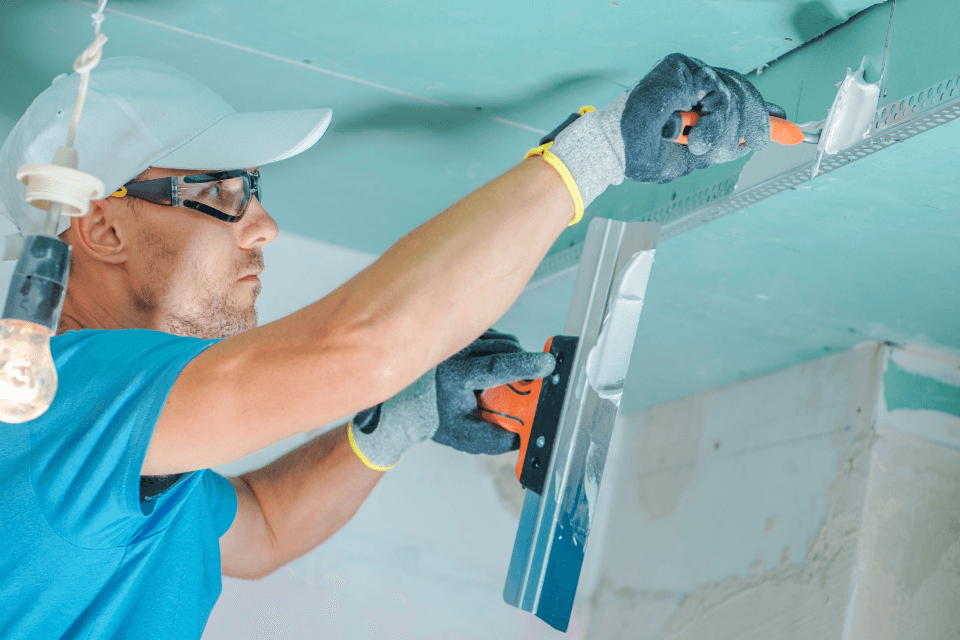
Drywalling the entire ceiling adds cost. Leaving it exposed and painting can save money and preserve height.
4. Bathrooms and Plumbing Additions
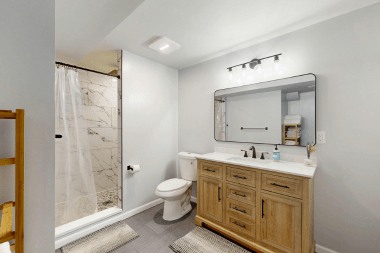
Bathrooms are one of the most expensive additions in a basement remodel.
Even if a home is “pre-plumbed,” that plumbing isn’t always correctly located or spaced for your final layout. If there wasn’t a design in place when the plumbing was installed, we often have to redo it anyway.
Relocating plumbing means:
- Cutting into concrete
- Installing new drains and supply lines
- Repouring and finishing the slab
Selections (tile, fixtures, vanities) do affect cost, but they’re typically smaller variables compared to the plumbing work itself.
The biggest cost driver is infrastructure, not finishes.
5. Egress Windows and Natural Light

PC: Journal of Light Construction
Egress windows are often the largest single cost factor in a basement remodel.
Installing one requires cutting through the concrete foundation wall and excavating outside for a window well. A standard vinyl well is the most cost-effective option. Upgrading to a timber well or a custom-built design increases cost but improves appearance.
Each county may have slightly different requirements, so confirming local code before starting is critical.
If your basement needs an egress window, plan for it early. It’s not a small add-on.
6. Electrical and Lighting Design
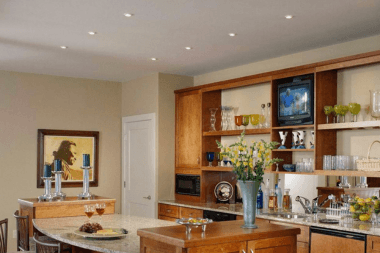
Lighting design can range from basic to architectural.
Do you want the minimum number of recessed lights to meet code? Or do you want accent lighting that highlights beams, built-ins, artwork, or entertainment areas?
Because basement ceilings are typically lower, we usually install flush recessed lights rather than surface-mounted fixtures to preserve headroom.
More fixtures, more circuits, and more specialty lighting features mean higher electrical costs.
7. Flooring and Wall Finish Selections
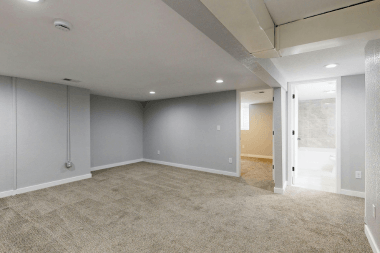
Your basement’s finish level is largely up to you and greatly influences your project cost.
When it comes to walls, drywall is the most common finish and the most cost-effective. But adding shiplap, wallpaper, wainscoting, or specialty trim increases material and labor costs.
Flooring also matters, especially in Michigan basements.
If your basement has a history of moisture or flooding, we don’t recommend wood or traditional carpet. In those situations, luxury vinyl plank (LVP) is typically the safer investment. In Michigan, LVP generally ranges from $1.50 to $12 per square foot installed, depending on product quality, and it’s fully waterproof and softer underfoot.
Carpet can feel warmer and more comfortable in cooler basements, with installation costs typically ranging from $3 to $25 per square foot, but it does come with a higher moisture risk. If water intrusion is a concern, replacing wet carpet can quickly offset any upfront savings.
Anything beyond standard finishes increases the overall investment.
8. Custom Built-Ins and Specialty Features
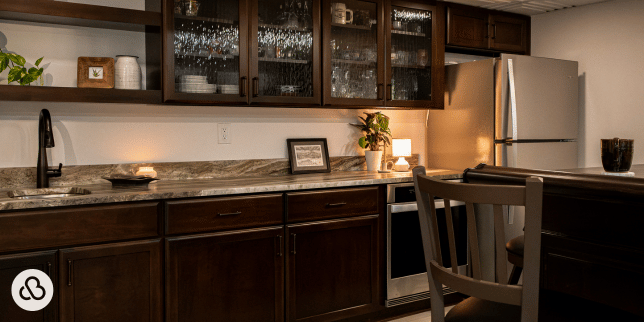
PC: Houzz
This is where basements go from basic to personalized.
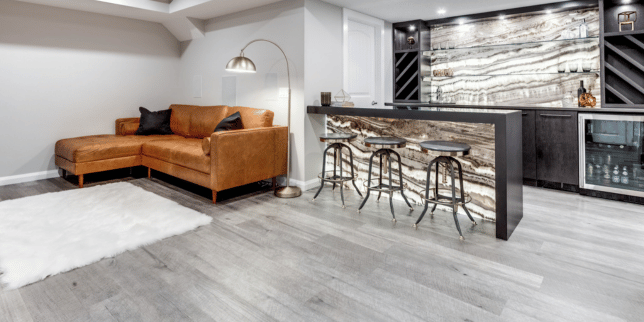
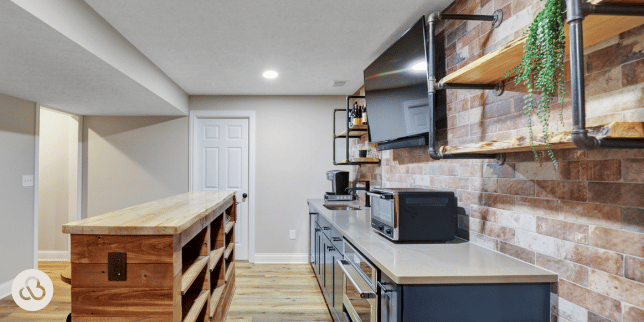
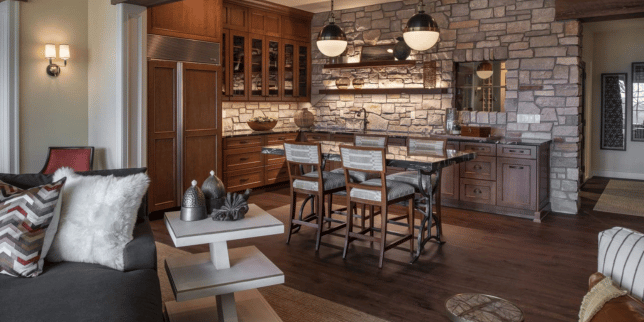
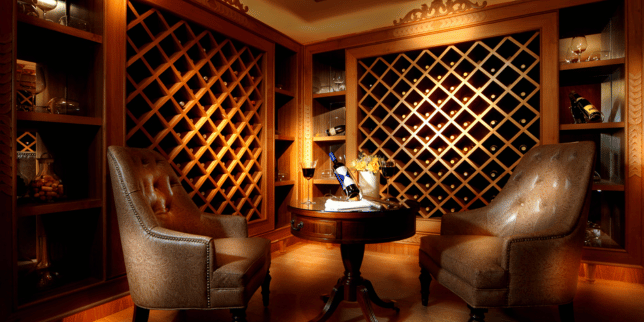
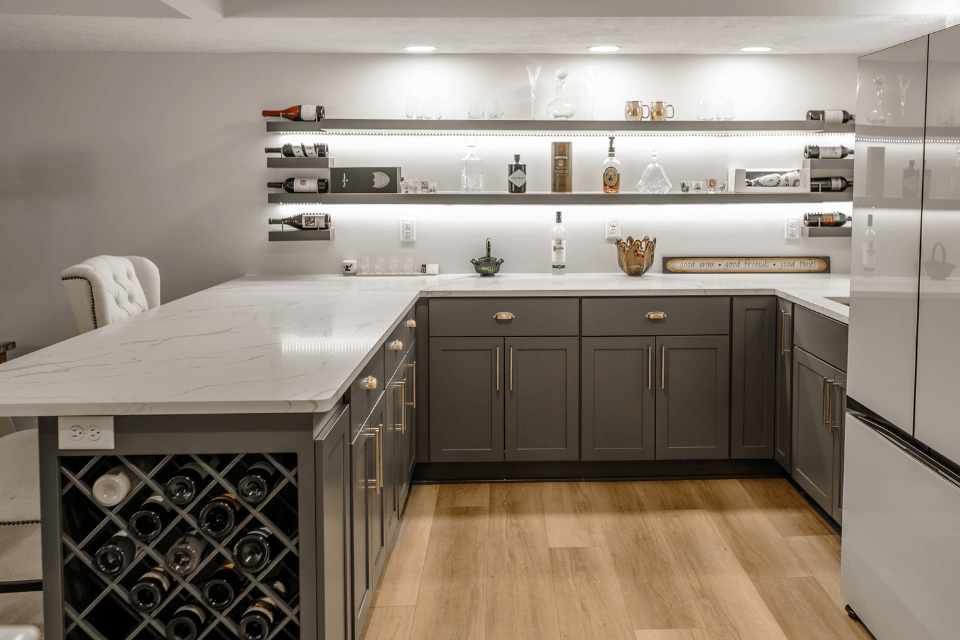
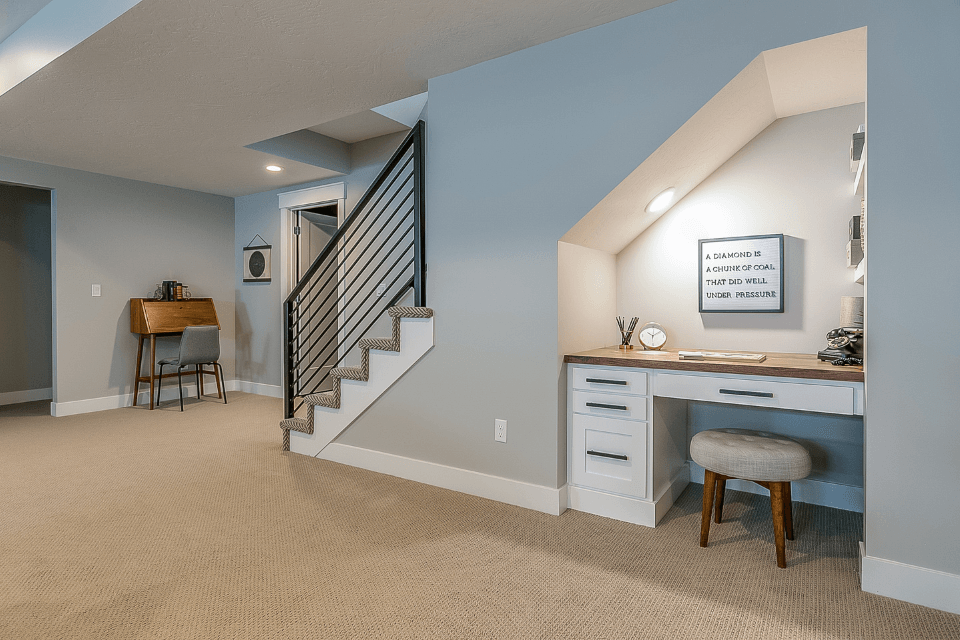
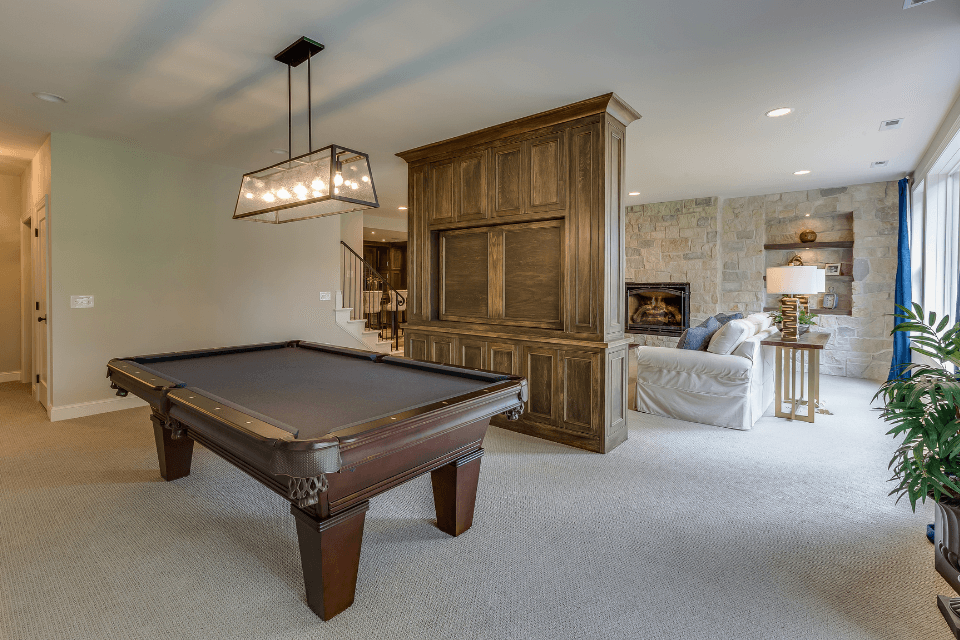
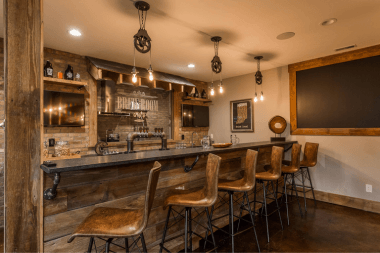
Built-ins, floating shelves, cabinetry, bars, kitchenettes, under-stair storage, and fully custom entertainment centers all add cost. A simple rec room costs far less than a fully designed lower-level living experience.
We’ve even built:
- Under-stair playhouses
- Built-in bars
- Large entertainment walls
- Custom cabinetry solutions
These features maximize space but also require more design, materials, and labor.
9. Code Requirements and Safety Features
PC: The Spruce
Code isn’t optional, and it influences cost.
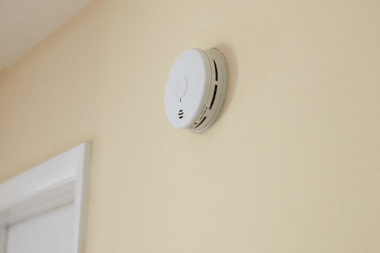
Egress is the biggest factor, but smoke detectors, hardwired systems, and mechanical adjustments also matter. Some homeowners choose to add accessibility features, such as stair lifts or elevators, for future planning.
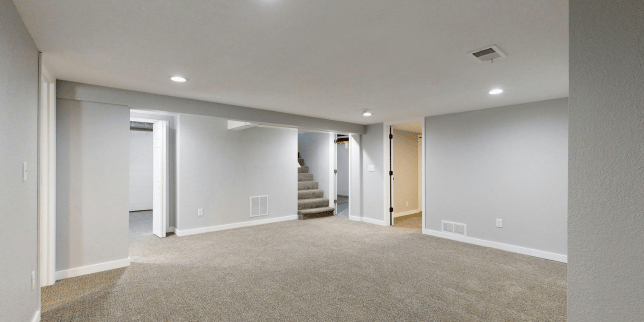
Even decisions like whether to drywall around HVAC systems affect both cost and compliance. However, meeting code properly protects your family and your investment.
10. Early Design Planning vs. Last-Minute Changes
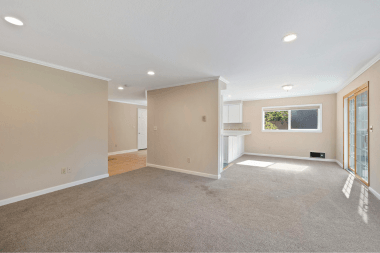
This may be the most overlooked cost factor of all. When design decisions are made early, everything flows more smoothly.
Plumbing goes in the correct location. Electrical is planned properly. Materials are ordered correctly. Code compliance is verified before construction begins.
When plans change mid-project, costs rise.
We often see pre-plumbed basements where plumbing was installed without a final layout. It ends up being in the wrong spot and must be redone. That’s avoidable with proper planning.
Design first. Build second.
Next Steps to Remodeling Your Basement
Design choices have a significant impact on your basement remodeling costs, from the space's purpose to ceiling height and plumbing.
By understanding key factors such as layout, plumbing, and material selections, you can make decisions that align with your vision and budget.
At Custom Built, we guide you through every step of your remodeling journey, ensuring that design choices align with both your needs and your budget.
Ready to start your basement remodel? Contact us today for a consultation, and let’s turn your vision into a reality with a plan that works for you.

Now that you know more about how design choices influence your basement remodeling cost, let’s explore how much it costs to add a basement bathroom, the FAQs we hear the most about basement projects, and our design-build basement finishing services:
- How Much Does it Cost to Add a Basement Bathroom in Lansing, Michigan?: Costs from a Greater Lansing Basement Finisher - Discover the factors that influence basement bathroom costs in Lansing, Michigan, including plumbing, fixtures, layout considerations, and what homeowners can expect to invest in a finished basement project.
- Michigan Basement Remodeling: Frequently Asked Questions Answered by a Local Basement Finishing Contractor - Get answers to common basement remodeling questions about costs, timelines, layouts, moisture concerns, and what to expect during a basement finishing project in Michigan.
- Custom Built's Basement Finishing Services - Learn how Custom Built helps Greater Lansing homeowners transform unfinished basements into comfortable, functional living spaces designed around their family’s lifestyle and goals.