Do you find yourself running out of space in your kitchen? Cabinets feel crowded, countertops fill up quickly, and everyday items don’t always have a clear place to go. While adding a pantry sounds like the obvious solution, it’s normal to believe your kitchen simply doesn’t have the room. In fact, in many homes, adding storage without making the space feel smaller or disrupting the layout can be a real challenge.
As Greater Lansing kitchen remodelers, we work with homeowners who want more storage without sacrificing functionality. Not every kitchen needs a traditional walk-in pantry, and often, there are smarter ways to add pantry storage that work better for your space and lifestyle.
In this article, we’ll walk through seven practical ways to integrate a pantry without sacrificing space:
- Assess Your Current Kitchen Layout First
- Maximize Vertical Storage
- Use Custom Storage Solutions
- Create a Pantry in Unused Spaces
- Consider Concealed Pantry Options
- Explore Compact, Multi-Use Solutions
- Avoid Common Pantry Design Pitfalls
1. Assess Your Current Kitchen Layout First
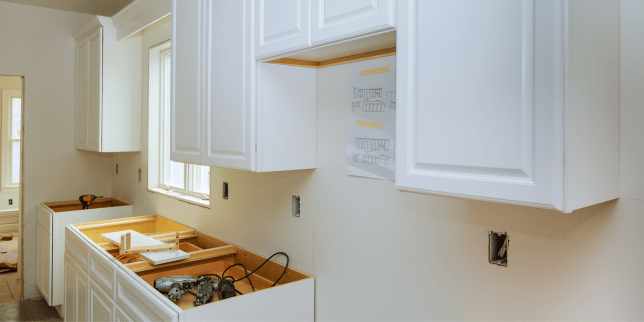
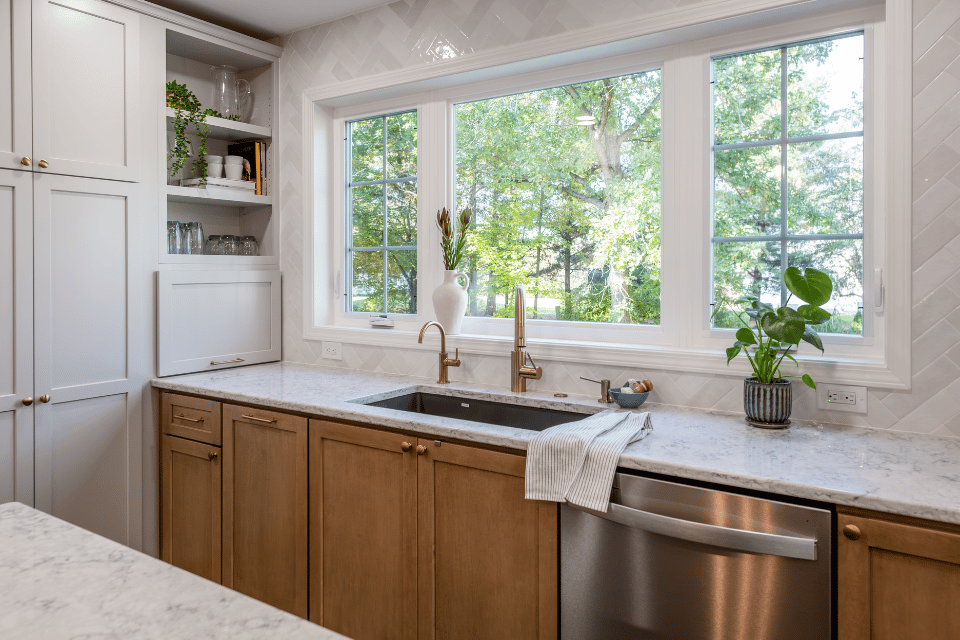
Before adding a pantry, it’s important to take a step back and evaluate how your kitchen actually functions day to day. Look at where you naturally prep food, how much counter space you rely on, and whether your current layout has any underused areas that could support additional storage.
In some kitchens, especially smaller ones, adding a traditional pantry can reduce valuable workspace or make the room feel more confined. In these cases, it’s often better to think in terms of integrated storage rather than a standalone pantry.
A helpful approach is to identify opportunities where storage can be built into existing zones without disrupting workflow. For example, countertop cabinet sections can add pantry-style storage while still preserving base cabinets and drawer space below.
These types of integrated solutions can support a variety of needs, such as:
- Storing small appliances that you don’t use daily, but still want to be accessible
- Creating a defined coffee or beverage area without dedicating an entire wall to it
- Organizing frequently used pantry items close to prep zones for convenience
- Reducing countertop clutter by giving everyday items a designated home
By carefully assessing how you move through your kitchen and where space is being underutilized, you can determine whether a full pantry is necessary or if a more integrated storage solution will better support your layout without sacrificing functionality.
2. Maximize Vertical Storage
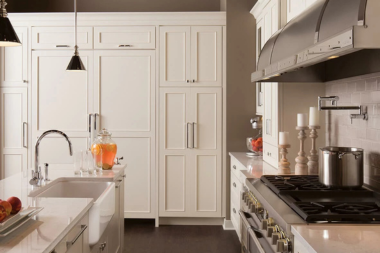
PC: Dura Supreme
When space is limited, vertical storage becomes one of the most effective pantry solutions. Tall cabinets allow you to take advantage of floor-to-ceiling storage without increasing your kitchen's footprint.
Pull-out shelves are especially helpful in tall pantry cabinets. These are typically around 24 inches deep, making it easier to access items without reaching into the back of the cabinet.
Some vertical pantry options include:
- Full pull-out pantry cabinets: The entire cabinet pulls forward, making everything easy to see and reach.
- Tall cabinets with roll-outs: Adjustable shelves provide flexibility for different storage needs.
- Pantry cabinets with microwave cut-outs: Combines appliance storage with pantry organization.
- Floor-to-ceiling storage: Maximizes space without taking up extra square footage.
These solutions can also be used outside of the kitchen. For example, vertical pantry storage can sometimes be integrated into nearby rooms or adjacent spaces, depending on your layout.
Design Considerations:
- Zoning by frequency of use: Place everyday items between waist and eye level, with seasonal or bulk items higher or lower.
- Vertical weight balancing: Keep heavier items in lower sections to prevent strain and improve cabinet longevity.
- Door swing impact on traffic: Ensure tall cabinet doors or pull-outs don’t block walkways or adjacent appliances.
- Lighting depth strategy: Deep vertical storage benefits from integrated lighting at multiple shelf levels, not just the top.
3. Use Custom Storage Solutions
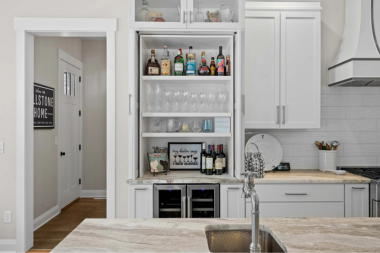
PC: Dura Supreme
Custom cabinetry offers flexibility that standard pantry layouts often can’t match. Instead of forcing a traditional pantry into your kitchen, custom storage can be designed around your specific needs.
Some popular custom pantry features include:
- Bottom drawers: Ideal for heavier items like bulk storage
- Layered storage systems: Multiple levels and compartments maximize efficiency
- Bi-fold doors: Allow wide access without taking up as much space
Design Considerations:
- Task-based storage grouping: Design sections around kitchen tasks (breakfast prep, baking, snacks) rather than generic categories.
- Appliance workflow planning: Ensure appliances have a “home base” that supports how often and where they’re used.
- Drawer hardware load capacity: Heavier custom drawers should be rated for long-term weight (especially for bulk storage).
- Reach efficiency design: Prioritize single-motion access (pull-out vs. lift-and-search) to reduce daily friction.
These solutions help create a pantry that feels organized and functional without requiring a large footprint.
4. Create a Pantry in Unused Spaces
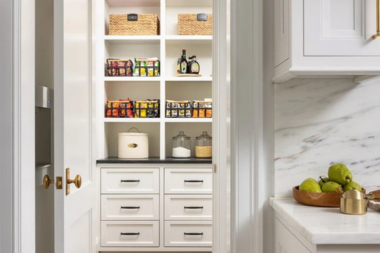
PC: The Spruce
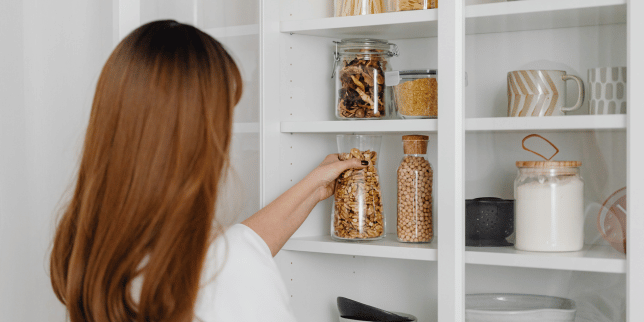
Sometimes the best pantry solutions come from spaces that are currently underutilized. Areas like hallways, corners, or small closets can often be converted into functional pantry storage.
However, it’s important to consider traffic flow and accessibility. You don’t want to place a pantry in a location that blocks movement or creates congestion.
Some creative options include:
- 12-inch deep cabinets: Shallow cabinets can still provide useful storage in tight spaces
- Converted broom closets: Adding shelving or roll-outs can transform unused closets
- Tall cabinets in adjacent spaces: Extending storage beyond the kitchen can improve organization
- Adjustable shelving: Allows flexibility for changing storage needs
One example includes adding a tall cabinet with a roll-out shelf at counter height for a coffee or Nespresso station, along with extra shelving for pods and accessories.
This creates a designated storage area without impacting kitchen space. These types of solutions are also helpful if you’re downsizing and still want organized storage.
Design Considerations:
- Spatial intrusion control: Ensure pantry placement does not visually or physically narrow high-traffic pathways.
- Power placement strategy: Plan electrical outlets early for coffee stations, microwaves, or charging appliances.
- Depth-to-function matching: Match cabinet depth to use case (shallow for dry goods, deeper for appliances or bulk storage).
- Lighting independence: These spaces often need dedicated lighting since they’re outside primary kitchen zones.
5. Consider Concealed Pantry Options
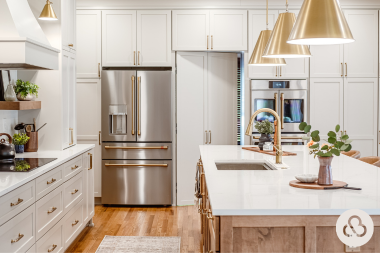
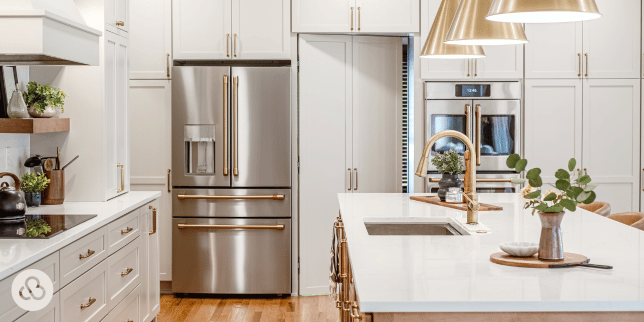
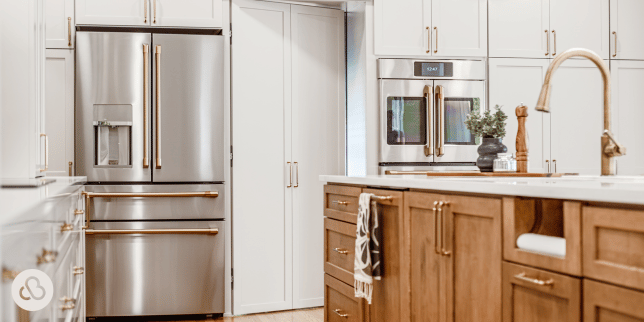
Hidden or concealed pantries are becoming increasingly popular, especially if you’re looking for a clean, seamless kitchen design (who isn’t?).
Some concealed pantry options include:
- Butler’s pantries: A separate prep and storage space connected to the kitchen
- Hidden cabinet doors: Pantry doors designed to match surrounding cabinetry
- Prep kitchens: Secondary storage and prep areas behind the main kitchen
These designs help maintain a streamlined appearance while still providing ample storage.
Design Considerations:
- Alignment precision with cabinetry: Hidden doors require exact panel alignment to maintain a seamless visual effect.
- Hardware concealment planning: Handles, hinges, and reveals must be coordinated to avoid breaking the illusion.
- Ventilation for enclosed prep spaces: Closed pantries used for prep or appliances may require airflow consideration.
- Lighting activation method: Motion or door-activated lighting improves usability in hidden spaces.
6. Explore Compact, Multi-Use Solutions
PC: Lowe’s
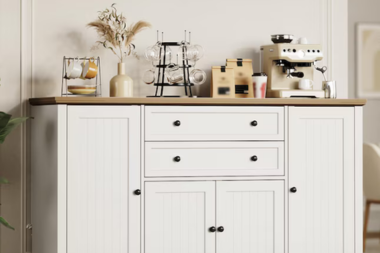
In smaller kitchens, multi-use storage is often the best approach. Rather than dedicating space to a single-purpose pantry, combining storage functions can improve efficiency.
Compact, multi-use solutions include:
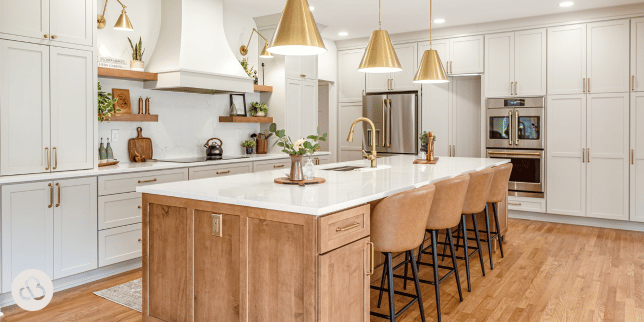
- Kitchen island storage zones: Deep drawers or cabinet sections within the island used for dry goods, baking supplies, or snacks while keeping them central to the main work area.
- End-cap cabinetry storage: Narrow cabinet runs at the end of an island or perimeter run that are designed for spices, oils, or frequently used ingredients.
- Toe-kick drawer storage: Hidden drawers built into the base of lower cabinets for storing flat or rarely used pantry items.
- Over-fridge or appliance bridge storage: Upper cabinetry above refrigerators or wall ovens used for overflow pantry goods that don’t require daily access.
These flexible solutions allow you to adapt storage based on changing needs.
Design Considerations:
- Shared-space conflict avoidance: Ensure different functions don’t compete for the same physical space (e.g., appliance vs. storage overlap).
- Daily-use prioritization: Place the most frequently used function at the most accessible level or zone.
- Flexibility over permanence: Design systems that can change over time without full remodels.
- Clean separation of categories: Even in shared spaces, define clear internal organization zones to avoid clutter buildup.
7. Avoid Common Pantry Design Pitfalls
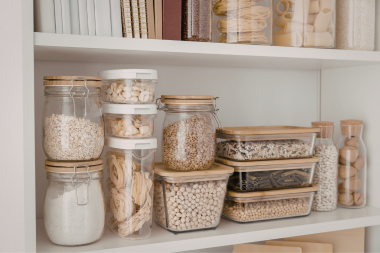
When adding pantry storage, small design mistakes can create long-term frustration. Careful planning helps ensure your pantry improves functionality rather than limiting it.
Some common factors to watch for include:
- Door swing clearance: Pantry doors shouldn’t open into appliances or walkways
- Cabinet depth: Deep cabinets can make items difficult to reach
- Traffic flow: Storage should not interrupt movement through the kitchen
- Consistency with cabinetry: Matching finishes helps create a cohesive design
Taking these details into account helps ensure your pantry works well within your overall kitchen layout.
Design Considerations:
- Full-motion testing before build: Physically map cabinet and appliance movement before final installation.
- Blind spot prevention: Avoid storage areas that are hard to see or naturally get forgotten.
- Proportional design balance: Pantry size should match the kitchen scale, not overwhelm or underperform it.
- Workflow interruption checks: Confirm pantry placement supports, rather than interrupts, cooking and prep flow.
Next Steps to Remodeling Your Kitchen in Michigan
Adding a pantry doesn’t always require a large walk-in space. With the right approach, you can add storage without sacrificing functionality. By using vertical storage, custom solutions, and unused spaces, you can add a pantry that fits your kitchen.
At Custom Built Design & Remodeling, we help homeowners create storage solutions that improve organization and functionality. If you're considering adding a pantry, our team can help you find options that fit your space and daily routine.

Now that you know more about how to integrate a kitchen pantry without sacrificing space, let’s explore bathroom layout mistakes to avoid, the best storage ideas, and our design-build remodeling services:
- Everything You Need to Know About Kitchen Remodeling in Michigan: FAQs - Get answers to common questions about kitchen remodeling in Michigan, including costs, timelines, design decisions, and what to expect during your project.
- How to Decide Where to Put Features in Your Kitchen Remodeling Project - Learn how to plan the placement of appliances, storage, and work zones to create a kitchen layout that’s functional, efficient, and tailored to how you cook and live.
- Custom Built Luxury Kitchen Remodeling Services - Explore how Custom Built Design & Remodeling designs and builds luxury kitchens with custom layouts, high-end finishes, and personalized features tailored to your lifestyle.
Topics: