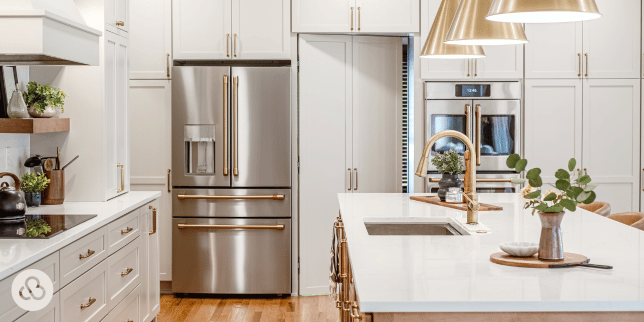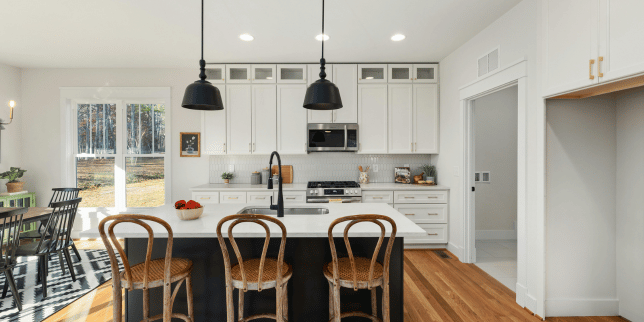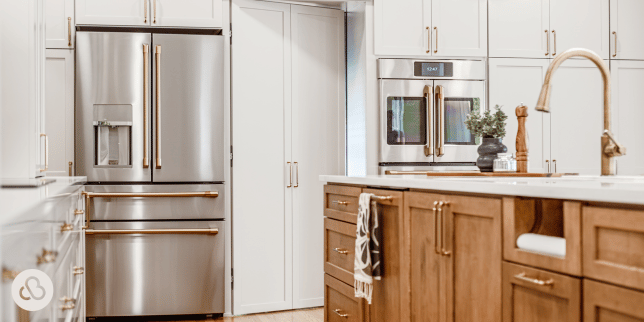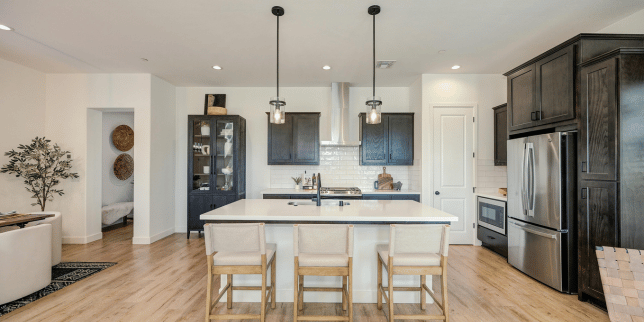

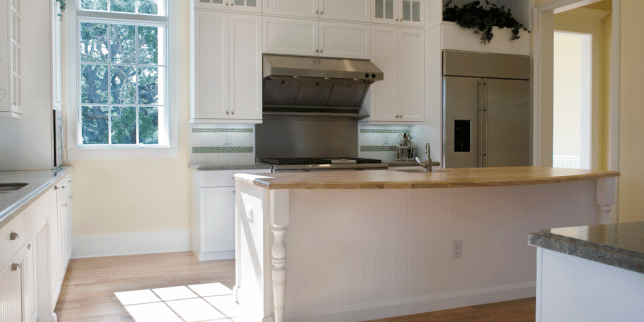
You’ve dreamed of the perfect kitchen, but without careful planning, common layout missteps can create daily headaches. Frustrating traffic flow, cramped prep areas, and hidden storage problems often don’t appear until you’re living in the space long after the remodel is finished.
At Custom Built, we design and remodel kitchens every day, helping homeowners avoid pitfalls that can compromise function, comfort, and long-term value. We combine practical experience with thoughtful design strategies to ensure every remodel works for real-life use, not just what looks good in photos or on TV.
In this article, we’ll highlight the nine most common kitchen layout mistakes homeowners regret later, and show you how to plan smarter from the start, so your kitchen is as functional as it is beautiful:
- Poor Traffic Flow
- Misplaced Major Appliances
- Not Planning Enough Storage
- Oversized or Undersized Islands
- Ignoring Electrical and Outlet Placement
- Designing Only for Current Needs
- Choosing Style Over Function
- Underestimating Clearances and Spacing
- Not Testing the Layout Before Building
1. Poor Traffic Flow
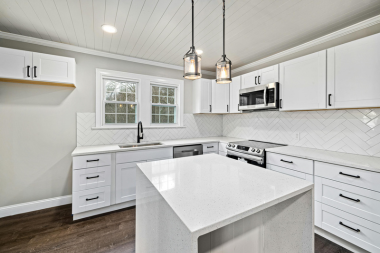
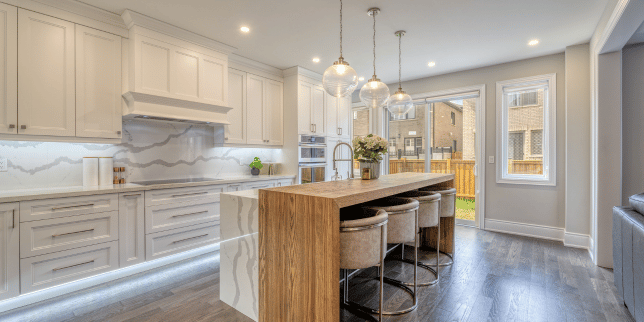
Open-concept layouts and kitchen islands are incredibly popular, but copying trends from TV or magazines without a real plan can create daily frustration. Poor traffic flow makes cooking and entertaining harder, and in extreme cases can create safety hazards.
Common problems include blocked paths around islands, awkward angles between workspaces, and collisions when multiple people are in the kitchen.
How to Avoid This Mistake:
- Walk your kitchen’s footprint with tape to simulate traffic paths and test spacing.
- Ensure at least 3 feet of clearance between islands, counters, and appliances.
- Consult a design-build team early to create a layout tailored to your family’s habits and home’s footprint.
2. Misplaced Major Appliances
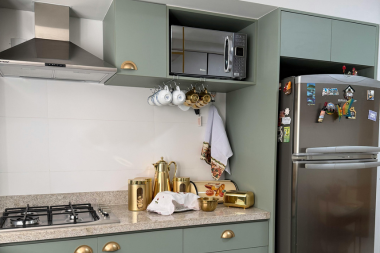
Even the most beautiful kitchen will be frustrating if appliances are poorly placed. Incorrect appliance placement can result in wasted steps, blocked access, or costly plumbing and gas line changes.
This often happens when homeowners choose appliance locations based on trends rather than practical function.
How to Avoid This Mistake:
- Map out the “Work Triangle” between your stove, fridge, and sink for optimal workflow.
- Check door swings and walking paths when appliances are open.
- Review plumbing and gas line requirements before finalizing placement.
3. Not Planning Enough Storage
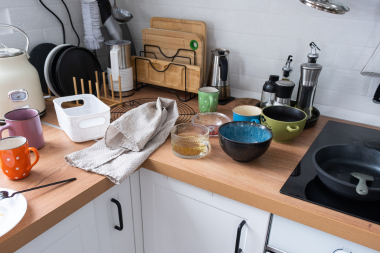
A lack of storage is one of the most common regrets after a kitchen remodel. Even a kitchen that looks amazing can feel cluttered if items aren’t easily accessible. Storage issues often involve poorly used corners, limited pantry space, and missed opportunities for innovative cabinetry.
How to Avoid This Mistake:
- Assess your current storage pain points and prioritize solutions.
- Include pull-out drawers, spice racks, and corner solutions.
- Consider tall cabinets (but not inaccessible), pantries, or vertical storage to maximize every inch of space.
4. Oversized or Undersized Islands
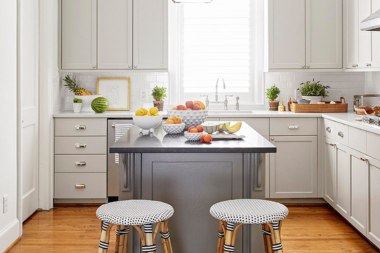
Islands are beautiful and functional, but the wrong size can compromise traffic flow, prep space, or appliance access. Oversized islands create bottlenecks, while undersized islands leave you with insufficient workspace.
How to Avoid This Mistake:
- Measure your space carefully and maintain a minimum of 3-foot walkways around the island.
- Explore portable or pull-out prep islands for a flexible workspace that balances aesthetics with functionality.
5. Ignoring Electrical and Outlet Placement
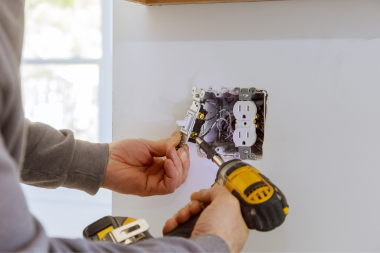
Electrical planning is often overlooked in kitchen remodels, leaving homeowners with inconvenient setups or safety hazards. Older homes may not have enough outlets for modern appliances, and a lack of lighting can reduce both functionality and ambiance.
How to Avoid This Mistake:
- Install outlets every 2 feet along counters and islands, in line with code requirements.
- Plan task lighting above prep areas and ambient lighting for the whole kitchen.
- Work with an electrician to ensure appliances and gadgets can be used safely and conveniently.
6. Designing Only for Current Needs
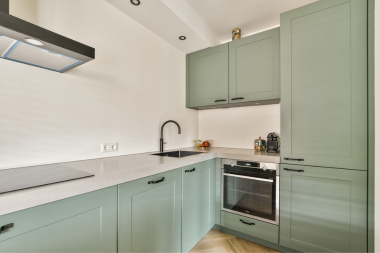
A kitchen remodel is a major investment. You don’t want it to feel outdated in a few years. Designing only for current needs can create accessibility challenges, limit storage, or require costly updates later.
How to Avoid This Mistake:
- Consider long-term family needs, including aging-in-place or kids’ access.
- Incorporate flexible storage solutions and adjustable shelving.
- Plan for future appliances, lifestyle changes, or mobility considerations.
7. Choosing Style Over Function
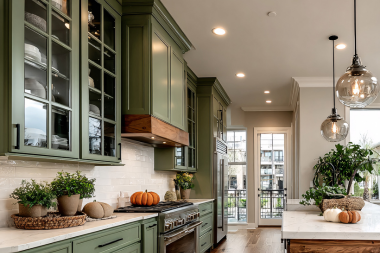
While it’s tempting to prioritize aesthetics, functionality is critical in the kitchen. Style decisions such as tall cabinets, large islands, or elaborate layouts can compromise daily usability if not thoughtfully planned.
How to Avoid This Mistake:
- Balance design trends with practical movement and accessibility.
- Use 3D renderings or VR walkthroughs to see how the space functions in real life.
- Work with designers to find solutions that are beautiful and functional. They will be able to identify the best features that integrate seamlessly with your space.
8. Underestimating Clearances and Spacing
PC: Homes & Gardens
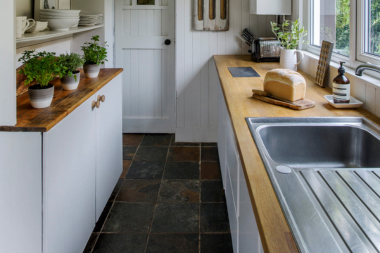
Cramped walkways, blocked cabinet doors, and tight spaces around appliances are common regrets. Even small clearance miscalculations can make daily cooking stressful and unsafe.
How to Avoid This Mistake:
- Maintain at least 3-foot walkways around all major elements.
- Check clearance for appliance doors, cabinets, and prep areas.
- Mock up the space with tape or temporary markers to test functionality before construction.
9. Not Testing the Layout Before Building
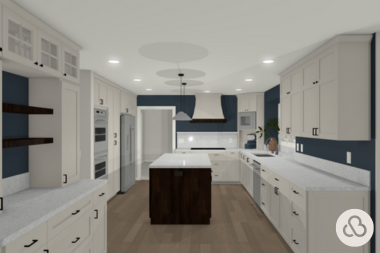
Plans on paper can only reveal so much. Without real-world testing, small issues like countertop overhangs, island placement, or appliance access can create major headaches once construction begins.
How to Avoid This Mistake:
- Walk the kitchen footprint using tape to visualize space.
- Use 3D renderings or VR walkthroughs for realistic planning.
- Adjust layouts based on real-life testing to avoid costly revisions.
Next Steps to Remodeling Your Kitchen
A kitchen that looks good but doesn’t function well can turn daily routines into frustrating obstacles. Thoughtful planning prevents cramped traffic flow, misplaced appliances, and missed storage opportunities.
By understanding common layout mistakes and taking steps to avoid them, you can create a kitchen that works for your lifestyle: efficient, comfortable, and tailored to your family’s needs.
At Custom Built, we guide homeowners through design decisions with real-world expertise, helping each kitchen combine style with function for lasting satisfaction.
Start your kitchen remodel on the right foot. Schedule a consultation with Custom Built today to create a layout that fits your home and your life.

Now that you know more about common kitchen layout mistakes homeowners regret later, let’s explore how to improve your kitchen remodeling experience, how much your project will cost, and how long it’ll take to finish with Custom Built:
- 10 Ways to Improve Your Kitchen Remodeling Experience - Discover effective strategies to make your kitchen renovation a more satisfying journey.
- How Much Does a Luxury Kitchen Remodel Cost in Lansing, Michigan? - Explore cost estimates, a budget breakdown, and factors that affect the cost of your luxury kitchen remodel.
- How Long Does a Luxury Kitchen Remodel Take to Get Finished with Custom Built? - A high-level overview of how long your project will take to complete during Custom Built’s Proven Process.
Topics: